

In September 2025 we removed 149 stoats from Orkney, 17 more than we did the same month last year.
This means for the first time in over a year, we have caught more stoats within a month than we had the year before. While an interesting outlier, we are not concerned, and still confident that we are seeing stoat activity decrease year-on-year.
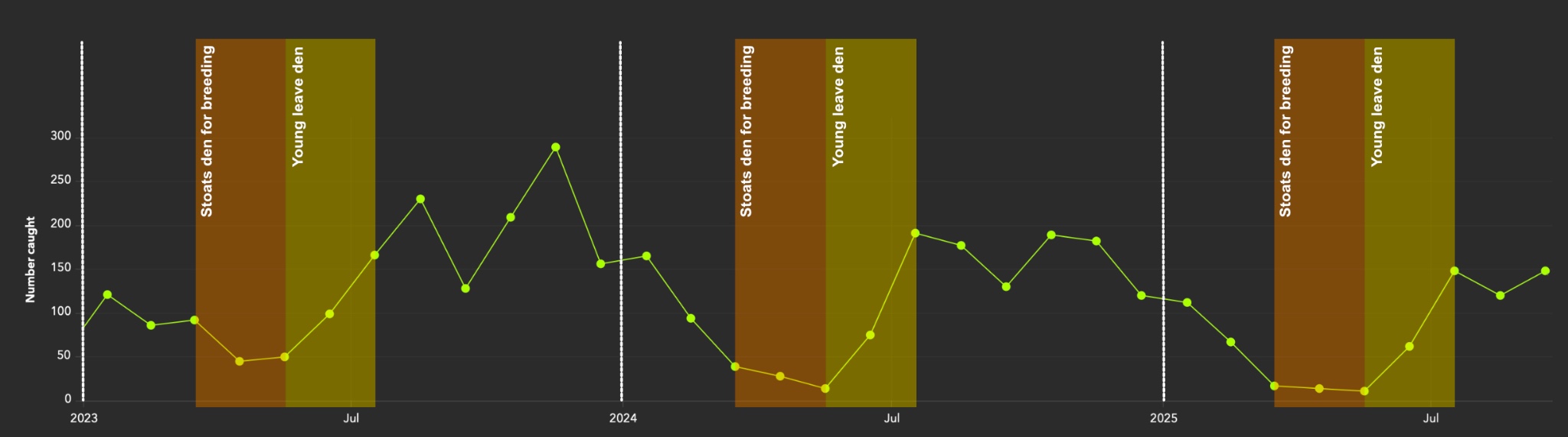
Our Mop-Up Phase trial in East Mainland is leading the way in a change of focus for us. Soon, our Orkney-wide focus will shift to detecting and trapping the final stoats - which means we'll be moving away from watching a passive catch-rate fall year-on-year, and be putting more resources on targeted trapping.
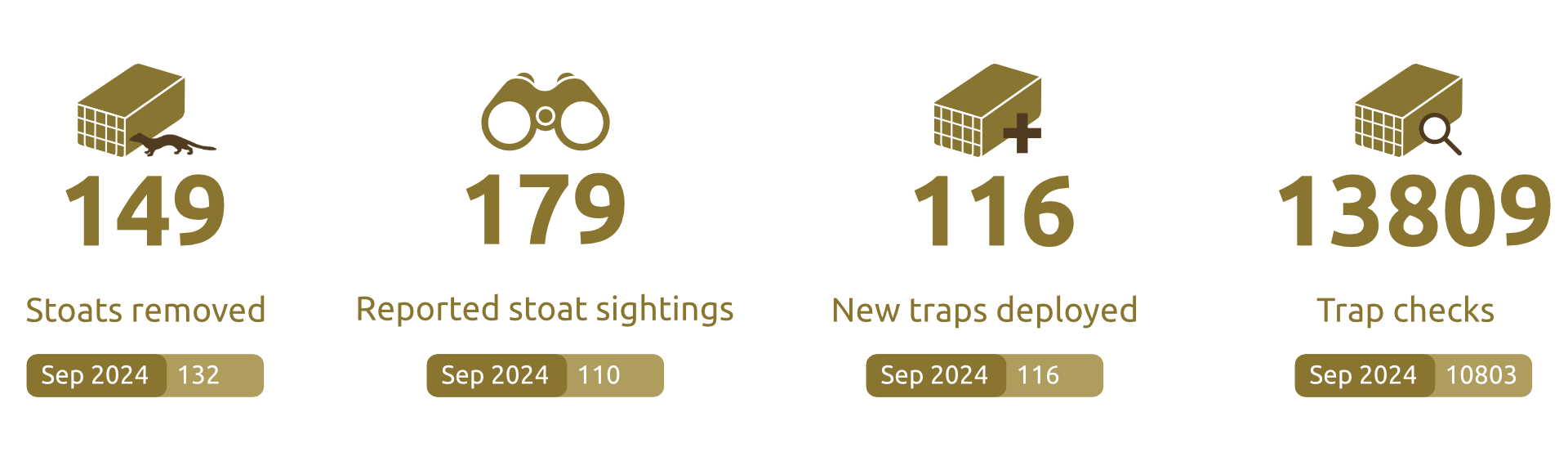
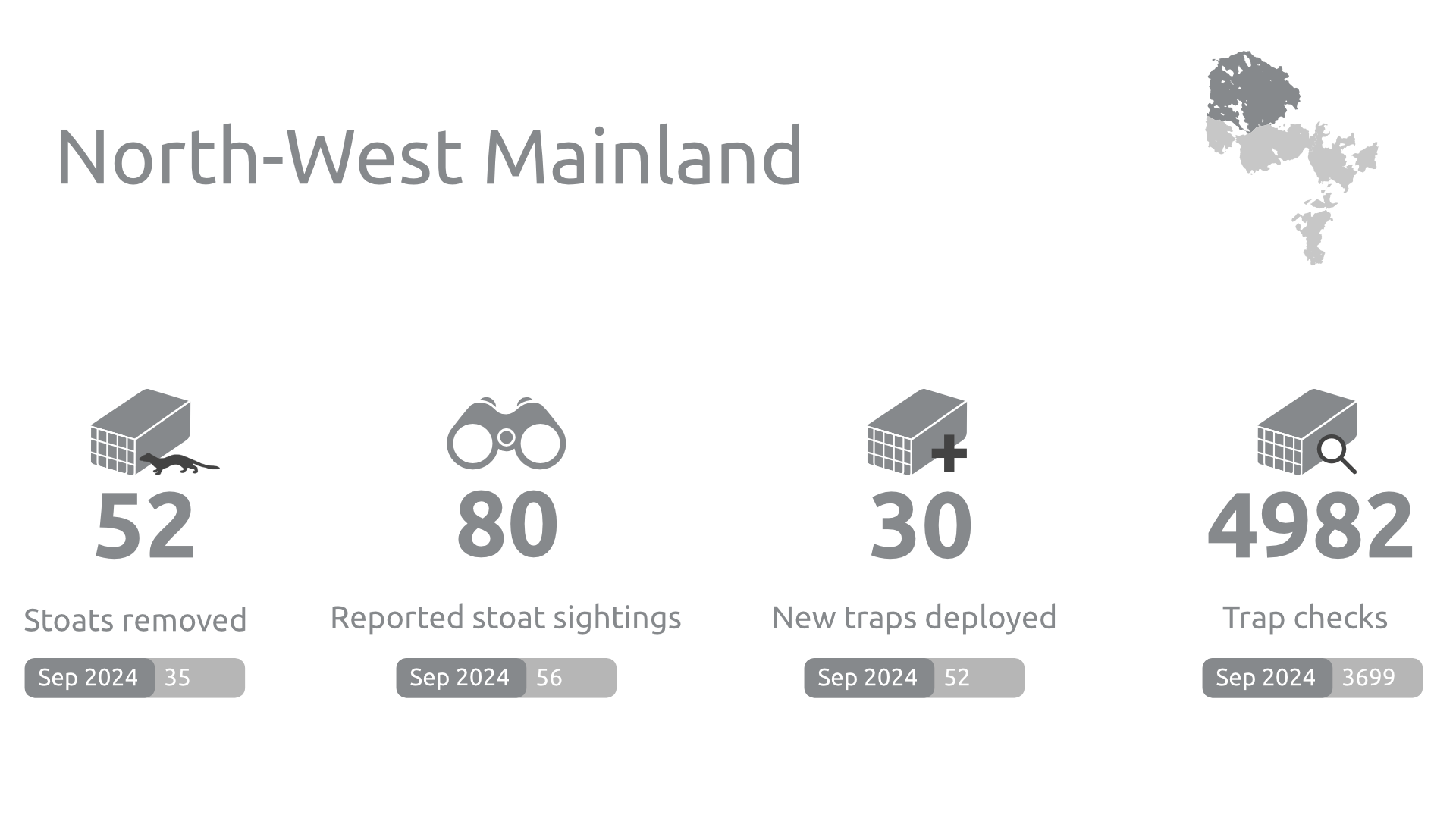
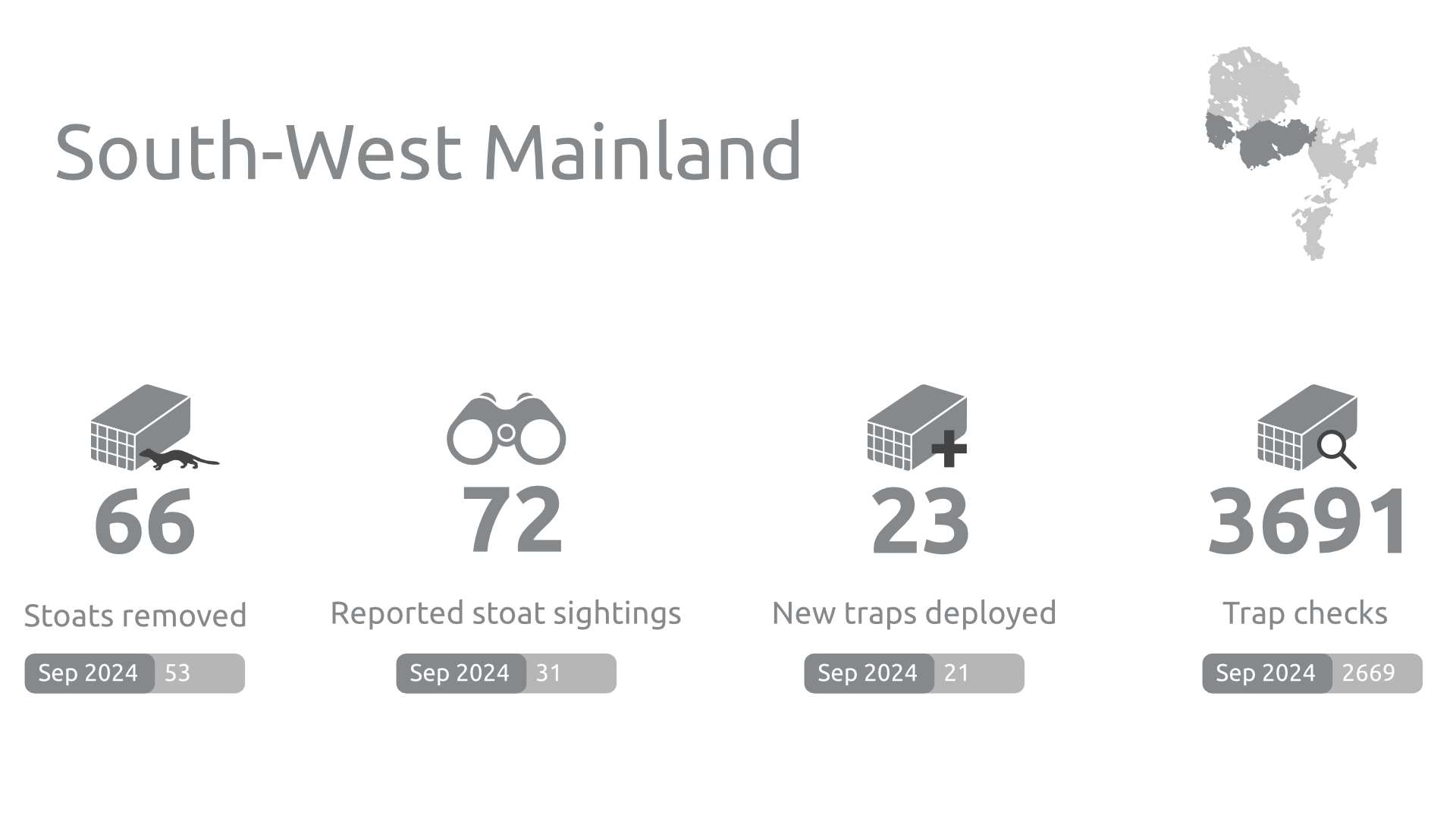
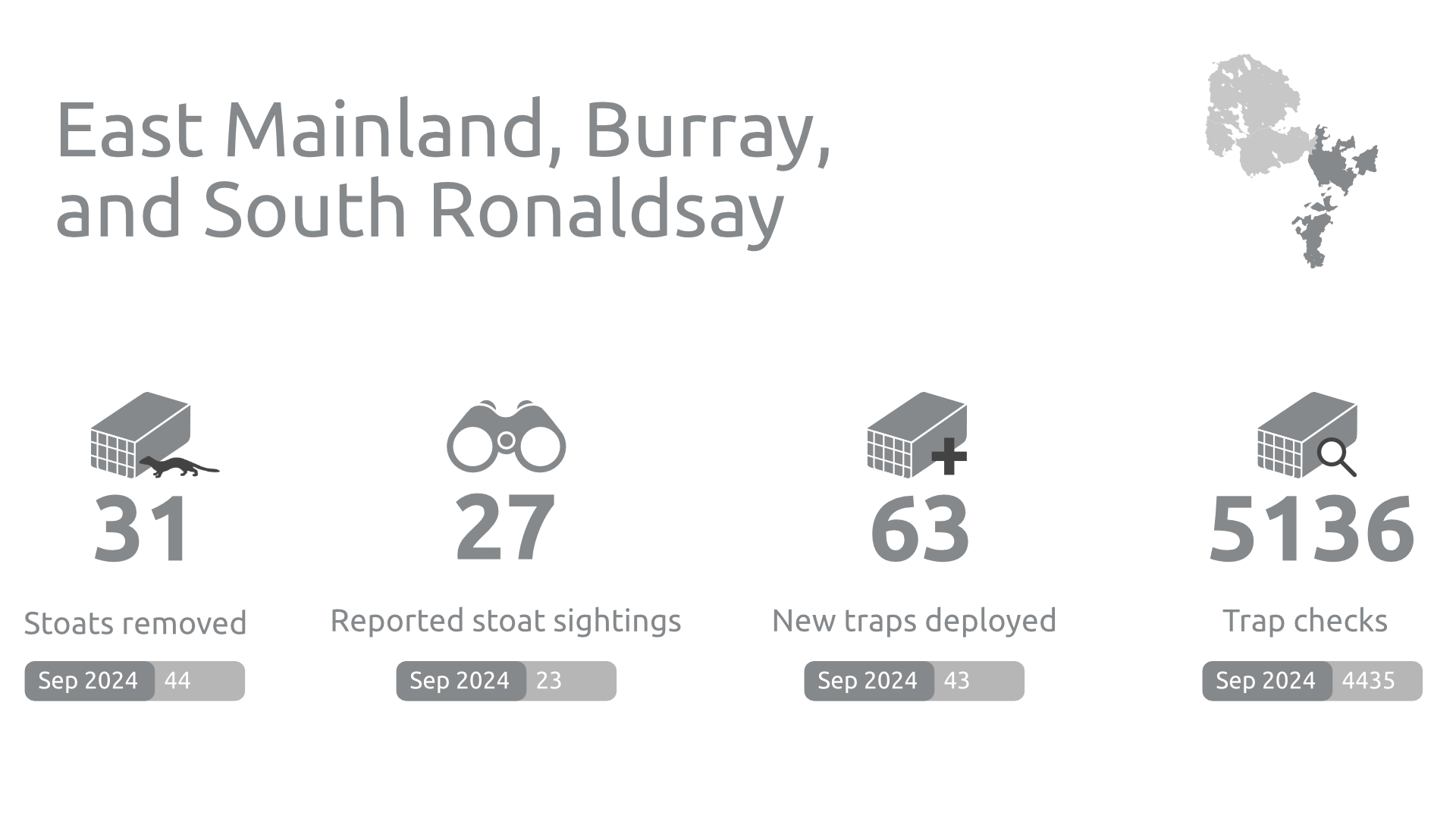
Most of our stoats in September 2025 were caught in South-West Mainland. Folk in North-West Mainland reported the most stoat sightings. And most new traps were deployed across East Mainland and the linked isles.
Alternative Trap Box Housings
Folk in East Mainland and the linked isles may have noticed some different trap boxes across Orkney. We’re testing two alternative housings which could help us catch stoats more effectively.

Run-through box (long box in photo)
This design gives stoats a straight path from the entrance hole to the trap. In our traditional boxes, they need to cross diagonally inside to reach the bait — but this run-through layout feels more natural for them to explore.
- Lighter and slimmer, easier for our team to carry into tricky spots
- Uses a smaller trap (DOC150) that makes the design possible
- No metal grate, so the entrance is easier for stoats to spot
- Holds two traps inside, doubling the chances of success
Tunnel trap (small box in photo)
This design uses a short pipe that looks and feels like a tunnel — something stoats are naturally drawn to. Instead of using bait, these traps are placed along 'linear features' like dry-stone walls and ditches where stoats are likely to travel.
- The pipe guides them straight onto the trap
- Mimics tunnels stoats already use, so they enter more naturally
- No bait needed — perfect for intercepting stoats on the move
The traps we use are legal for use in Scotland and reach welfare standards defined by the Agreement on International Humane Trapping Standards (AIHTS). They’re also approved by the Spring Trap Approval Order for Scotland and the UK. And all our trapping activities are carried out in accordance with legal requirements and best practice.
Both designs are already proving successful, with stoats being caught in each type.
We are constantly looking to provide variety in trap housings to catch animals that have so far avoided capture in the trap network while ensuring we follow legal requirements and our own strict protocols for minimising catching non-target species. By trialling different trap styles, we’re making sure we’ve got the best tools possible to protect Orkney’s native wildlife.
Using Sound to catch Stoats
In some boxes, we're using the power of sound to help us catch invasive non-native stoats. Trapper Helen explains why we're using audio lures and how they work.