Over the past month, the weather has taken a turn for the colder and darker – but it’s still a great privilege to be working out and about on Orkney’s moors and coastlines.
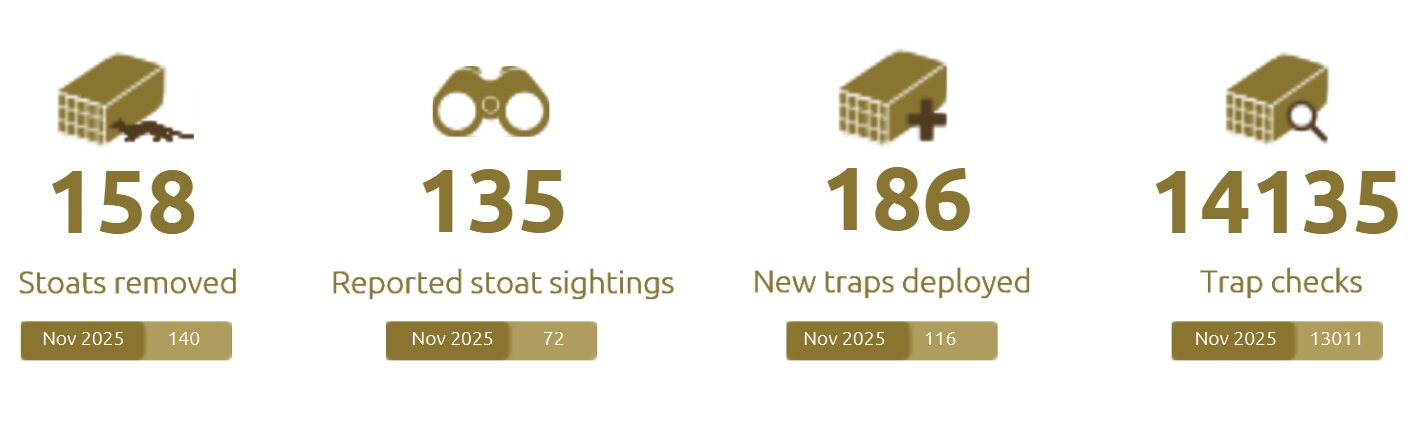
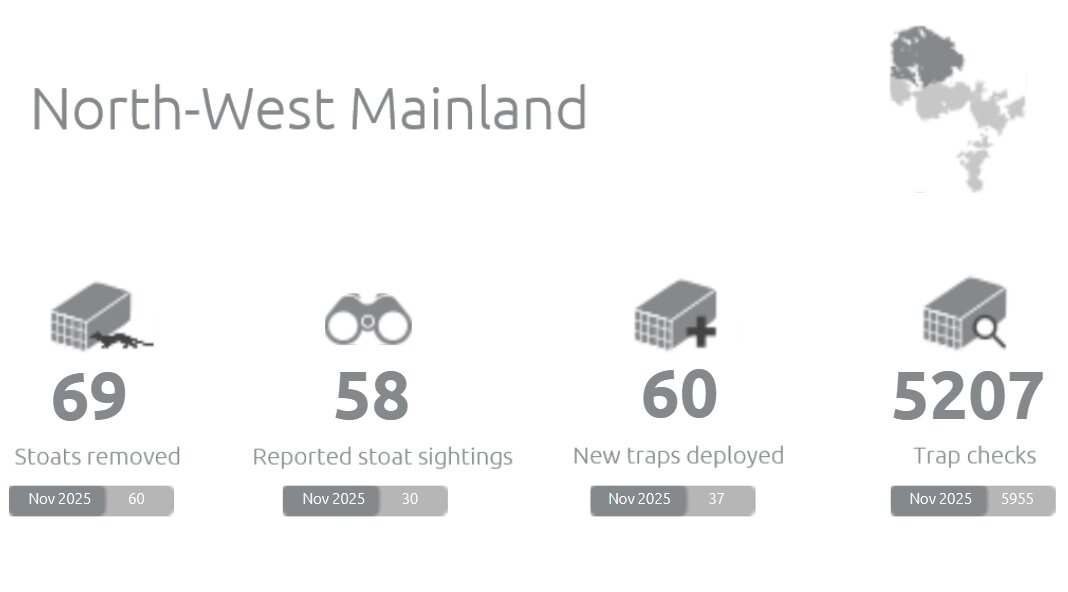
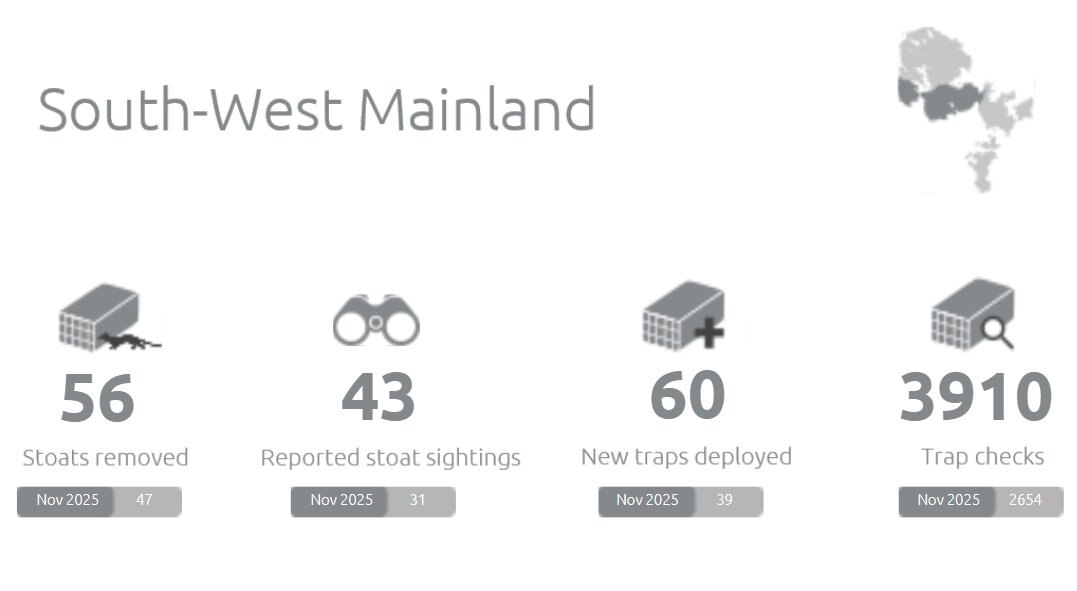
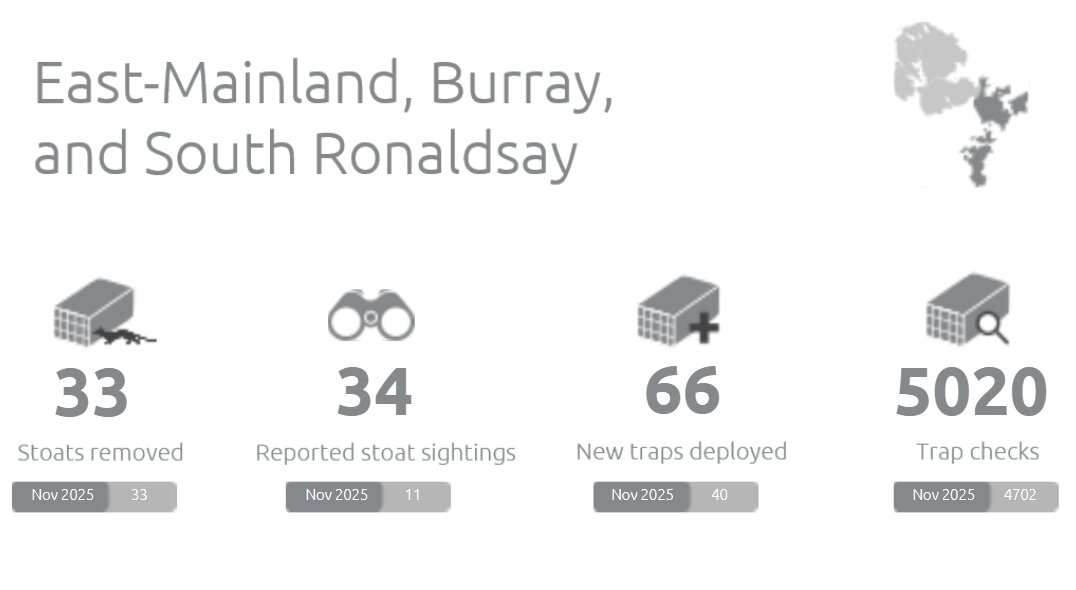
In October 2026, we at the ONWP removed 158 stoats from Mainland Orkney and the Linked Isles, collected 135 stoat sightings from locals and visitors, deployed 186 new traps, and carried out 14,137 trap checks. This represents 18 more stoats trapped than in October 2025.
It’s also an increase by 116 in stoat sightings from October 2025. This likely comes from more and more folk being aware of just how important it is to report their sightings – if you even think that you’ve seen a stoat, we want to know!
Keep your eyes peeled for a flash of white fur
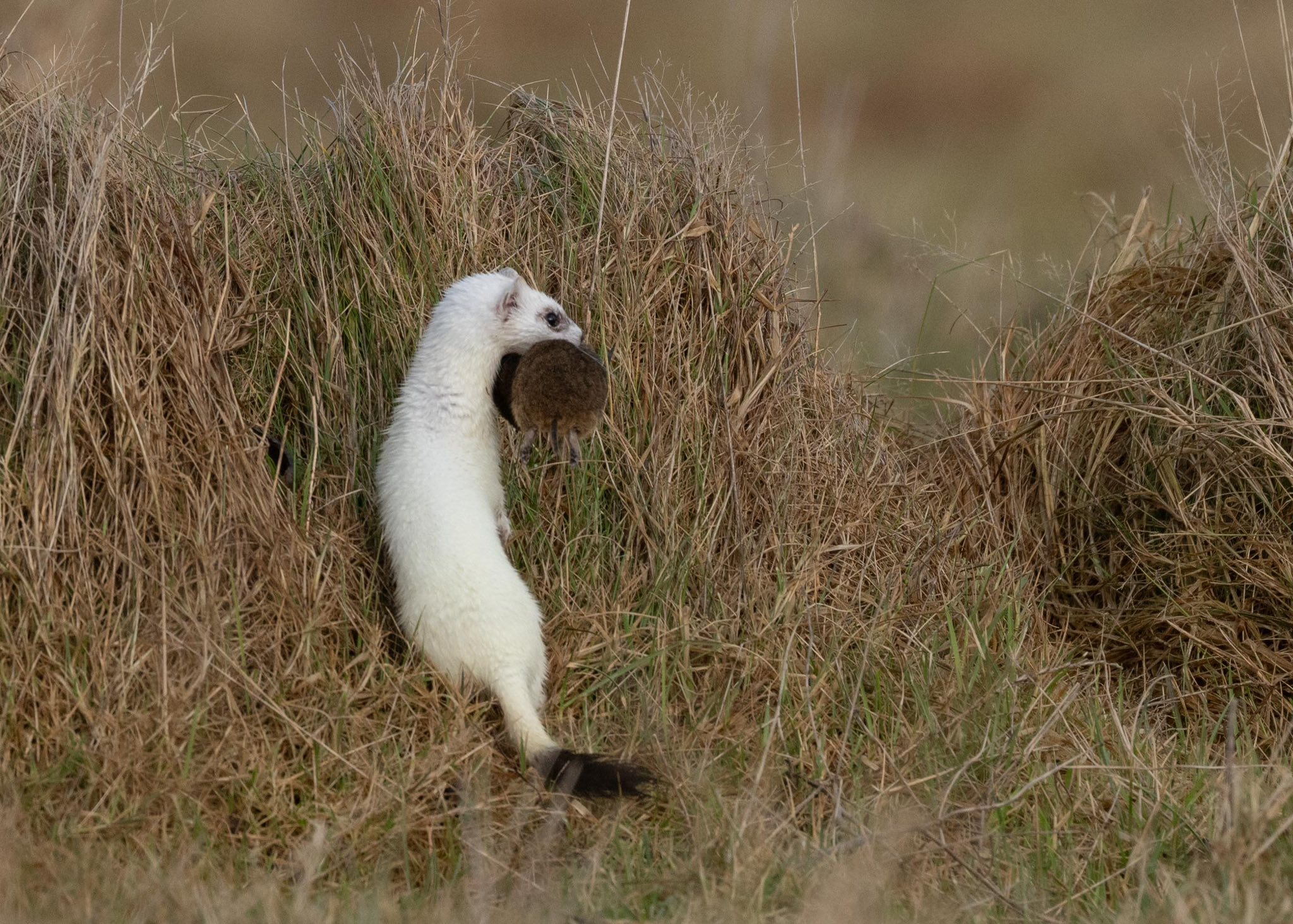
On our project cameras, and in sightings from folk in Orkney, the first white-coated ermine stoats of the year have begun to show up.
Like many mammals in northern climes, stoats can moult into a white coat, in response to the lower temperatures and shorter daylight hours. They’ve swapped their mottled brown backs and pale bellies for a plain white wardrobe, as in the picture below; the only spot of colour they keep is a tuft of black fur at the tip of their tail, which can be used to identify them year-round.
When this change happens before heavy snows arrive in our islands, it can make them much easier to spot among grass or heather across Mainland Orkney and the Linked Isles.
Important news from Rousay
You may have heard that, early in October, we were able to remove the invasive stoat that was confirmed present on Rousay in spring 2026. Later in the month, we caught and removed a second stoat – within just days of identifying it on camera.
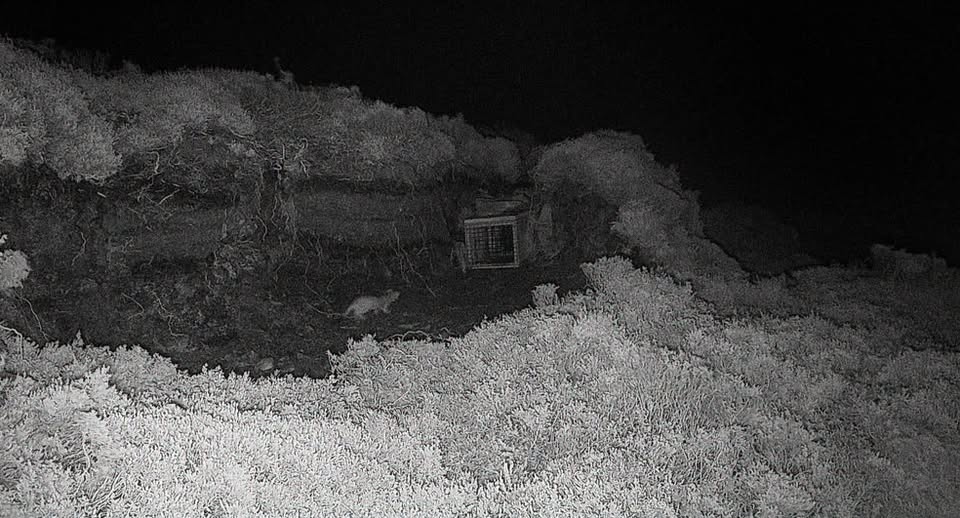
The animal was caught in the trap shown above, where a stoat was recorded on a nearby trail camera on Wednesday 21 October. We have confirmed that it was an adult male, and at least over a year old.
It’s not currently clear how either of these stoats arrived on the island. They may have swum across the Eynhallow Sound, which is well within the distance of open water stoats have been known to cross. It’s also possible that somebody chose to break the law, and endanger Rousay's native wildlife and economy, by deliberately releasing one or more stoats. Future DNA testing may help to confirm the stoats’ origins.
We are deeply grateful to our hard-working trappers, and to everybody in the Rousay community who has helped lay the groundwork that made this possible. The fantastic local volunteers, the landowners who’ve granted permission on their property for searching and trapping, and the many people (locals and visitors alike) who’ve reported their suspected stoat sightings have all done so much to help native wildlife!
We still must remain vigilant before we can confirm that wildlife in Rousay is safe. Our trappers and local community volunteers will be keeping the island under intense observation, so that if any other stoats are seen, we can respond to remove them as quickly and effectively as possible. An incident like this only reinforces just how important this monitoring work is.
As we continue with our biosecurity response on the island, we’ll work to make sure that the community is informed of all the latest developments.