Report a Sighting arrow-right

Stoat Snippets provide the latest updates from the Orkney Native Wildlife Project.

The past month has brought brisk winds, cold rains, and a bright harvest moon – and a new milestone for our project. We have now removed over 9,000 stoats from Mainland Orkney and the Linked Isles!

The project couldn’t have reached this point without support from folk in Orkney, both locals and visitors. People who’ve reported stoat sightings to us, landowners who have worked with us to allow access to their fields, and our fantastic volunteers have all played a huge part – so thank you, all!

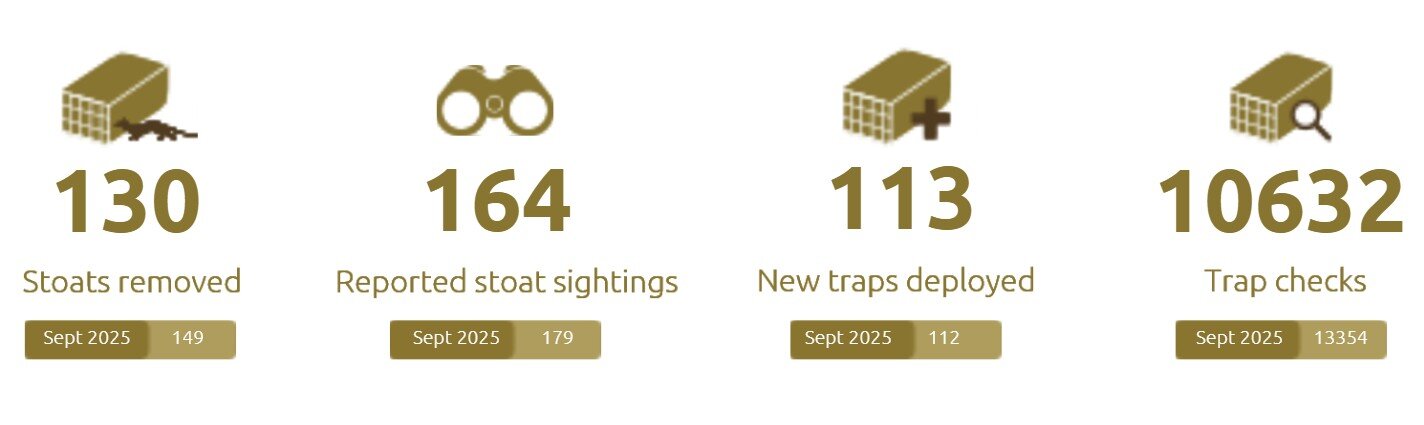
In September 2026, we removed 130 stoats, reacted to 164 reported sightings from folk in Orkney, deployed 113 new traps in the field, and carried out 10,632 trap checks. This represents 19 fewer stoats removed, and 15 fewer stoats sighted in Orkney, compared to September 2025.

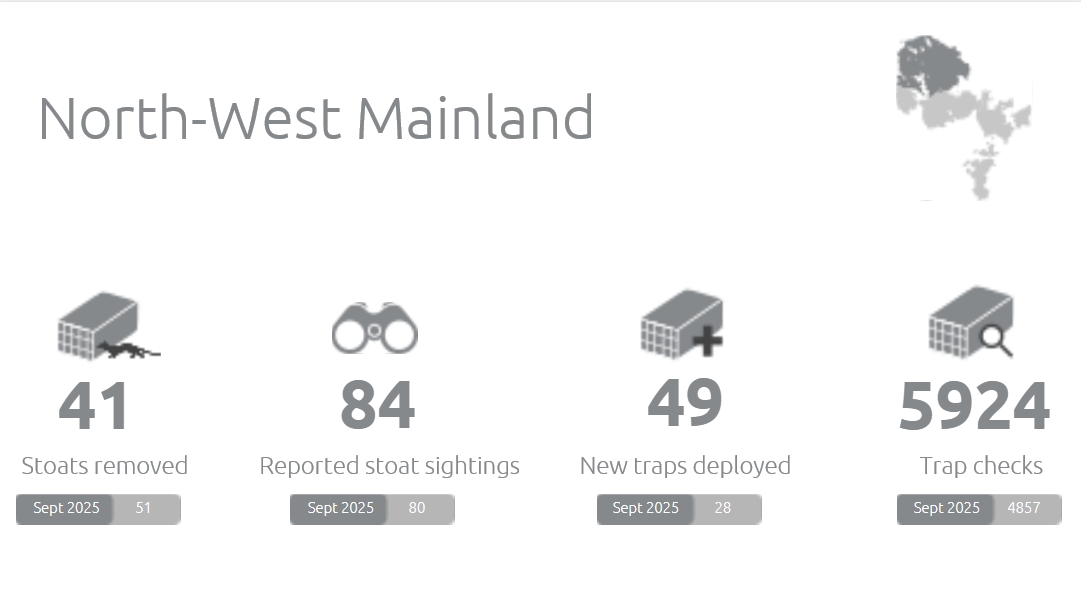
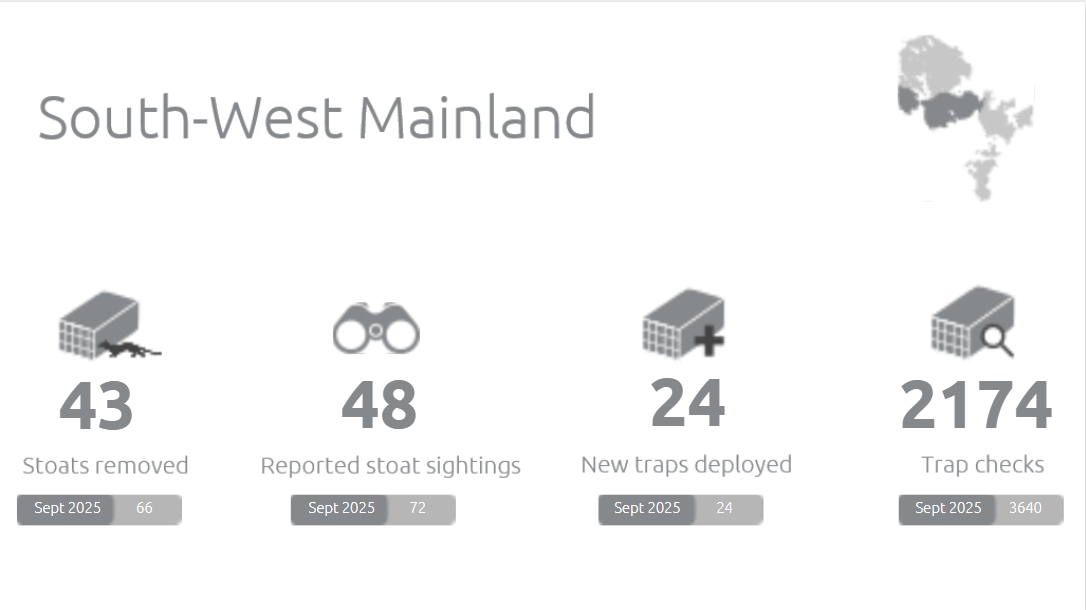
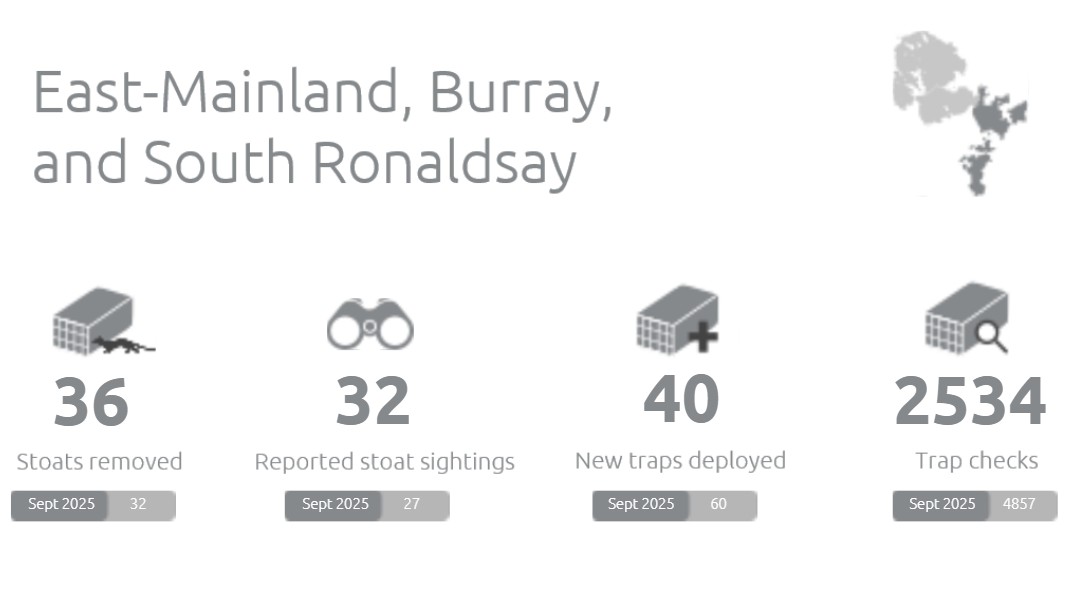
The September 2026 statistics for North-West Mainland, South-West Mainland, and East Mainland, Burray, and South Ronaldsay

Great news from Rousay

We have some excellent news to share. The stoat in Rousay has been caught!

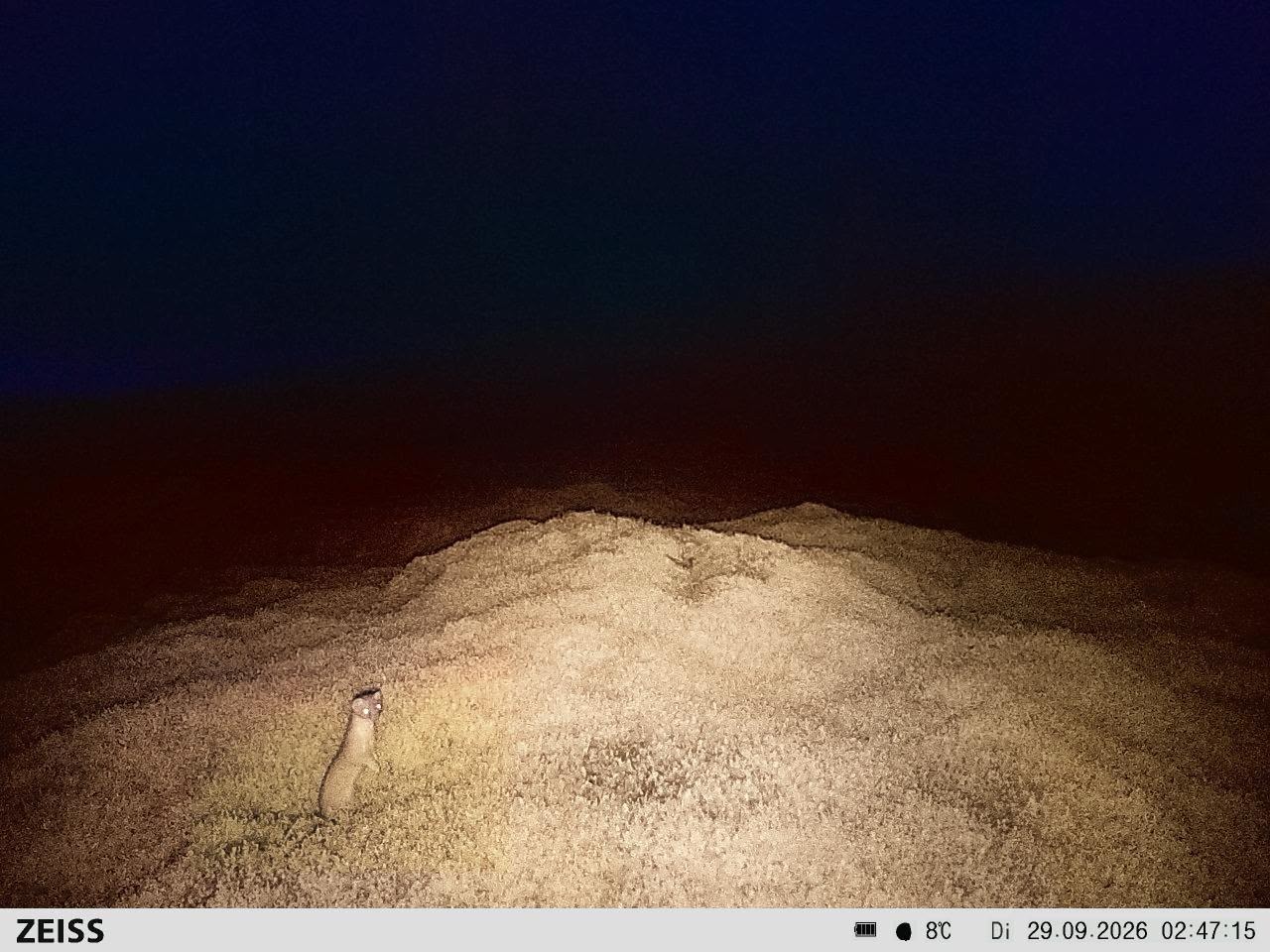
It was seen on camera on 29 September and again late on 8 October. On the afternoon of 9 October, our trappers found the stoat in a trap near the Loch of Loomachun. The stoat was a mature adult male, which is what we’d predicted based on its behaviour and the DNA that was retrieved from stoat scat (faeces) a while ago.

It was a big task to find and capture this stealthy, fast-moving animal that has been ranging so widely across a 4,500 Ha island, but it's lovely to see everyone's hard work and determination pay off.

Removing this stoat would have been so much harder without the support of the Rousay community - the fantastic volunteers who have supported the incursion so much since we confirmed there was a stoat, the landowners who have given us access to land to search and for trapping, and all folk (local and visitors alike) who have reported potential stoat sightings and signs. We are so incredibly grateful to them all!

There is still more work to do though, and we cannot get complacent. Over the coming weeks and months, we will need to keep up intensive monitoring efforts to be absolutely certain that this stoat was the only one. And if we see no further signs, in line with international best practice, we will need to keep monitoring the island for two years from 9 October before we can declare Rousay is stoat free.

The incursion on Rousay reinforces how important it is that we remove every last stoat from Mainland Orkney and the Linked Isles. This is the only way to protect Orkney's globally important native wildlife across all the islands in our county, and all it provides us - through enjoyment, wellbeing, inspiration, and the millions of pounds it brings to our economy each year through tourism. But it has also shown us just how much we can achieve when we all work together!

A note on bycatch in our traps

People sometimes ask us about how frequently we catch other species. We take every possible measure to ensure as few other animals are caught as possible. Our trap housings are constructed to prevent other animals from being able to reach the trap mechanism, and we use lures designed to specifically catch stoats.

The traps are also calibrated to the weight of a stoat, and our entrance hole design uses wire ties to prevent other animals large enough to trigger the traps from entering the box. Stoats, as slender, nimble tunnel-dwellers, are the only mammal species present in Orkney which could easily get past these ties. Combined, these measures all work to help minimise bycatch of other species. The only non-target species that we can’t minimise the chance of being caught is the brown rat, due to its similar size and weight to stoats.

From the end of June 2026 (the last time we shared bycatch figures) to the end of September 2026, throughout the county, we caught 639 rats, 177 rabbits, 48 starlings, 18 hedgehogs, 18 unidentified birds, rodents or other animals ,11 mice, 7 voles, and 7 frogs. Several of these species, like brown rats, are also not native to Orkney.

In addition, a single feral kitten was accidentally caught in July. When all the measures we use to prevent other species being caught are in place, it isn’t possible for even very small kittens to reach the trap mechanism. Sadly, due to human error, the wire tie on one of this trap’s entrances had not been correctly applied. We take full responsibility for this mistake, and we are deeply sorry that it happened. The ONWP has taken thorough steps to make sure that this won’t be repeated, and can guarantee that every trap housing has its ties correctly in place.

In the same period, we removed 472 stoats. Since each stoat must eat the equivalent of one Orkney vole a day just to survive, any limited impact of our trapping on voles and other small mammals will be far outweighed by the benefits of removing stoats from the islands.

Back to News & Events
Sign up to get the latest news
Subscribe arrow-right

Get Involved

volunteer
Volunteer
brown-stoat
Report a stoat
offer-land-access
Offer land access
donate
Donate