

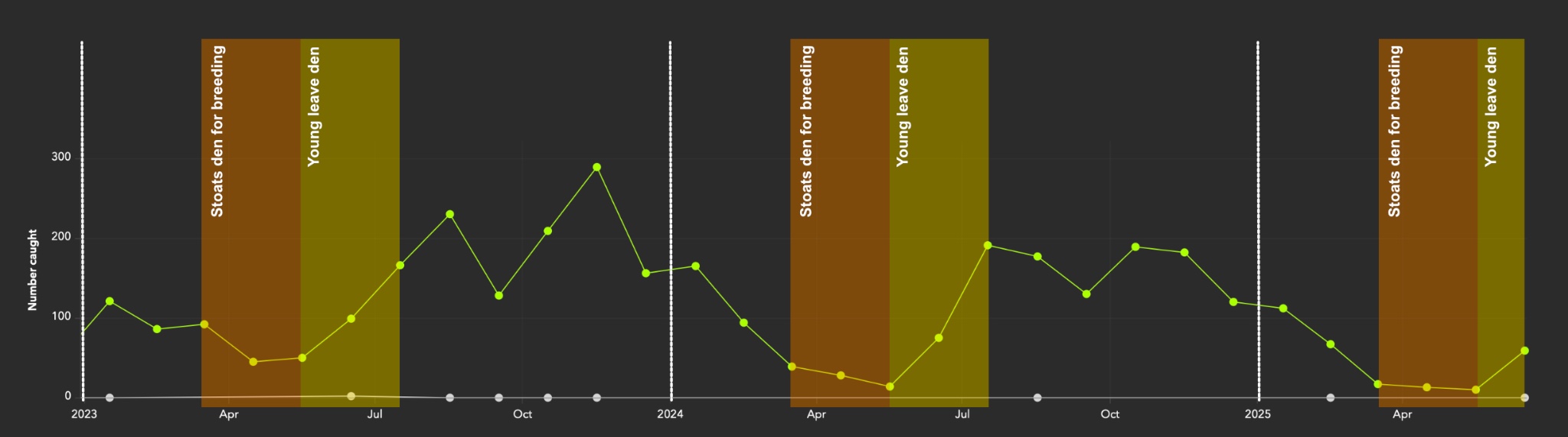
With litters of stoats leaving dens, we're seeing an uptick in the number we're catching and removing from Orkney. The invasive non-native species has been multiplying underground, and now they're ermerging back out to the world in family groups.
This is a crucial time for us. Family groups of stoats means there are more mouths to feed, which means more prey will be killed.
We see this pattern each year. Our catch rate drops as stoats hide produce young, and picks up again when they leave the den. What's important is that the overall population continues to shrink each year. With this opportunity for stoats to repopulate, we don't want them to remerge with more young than we had knocked down the year prior.
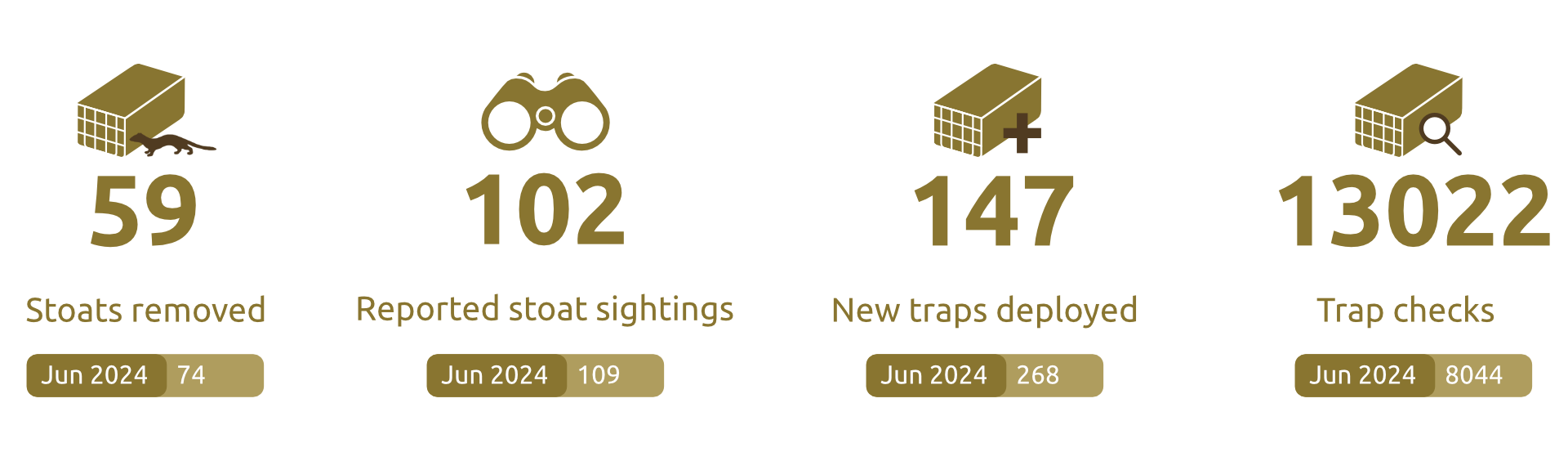
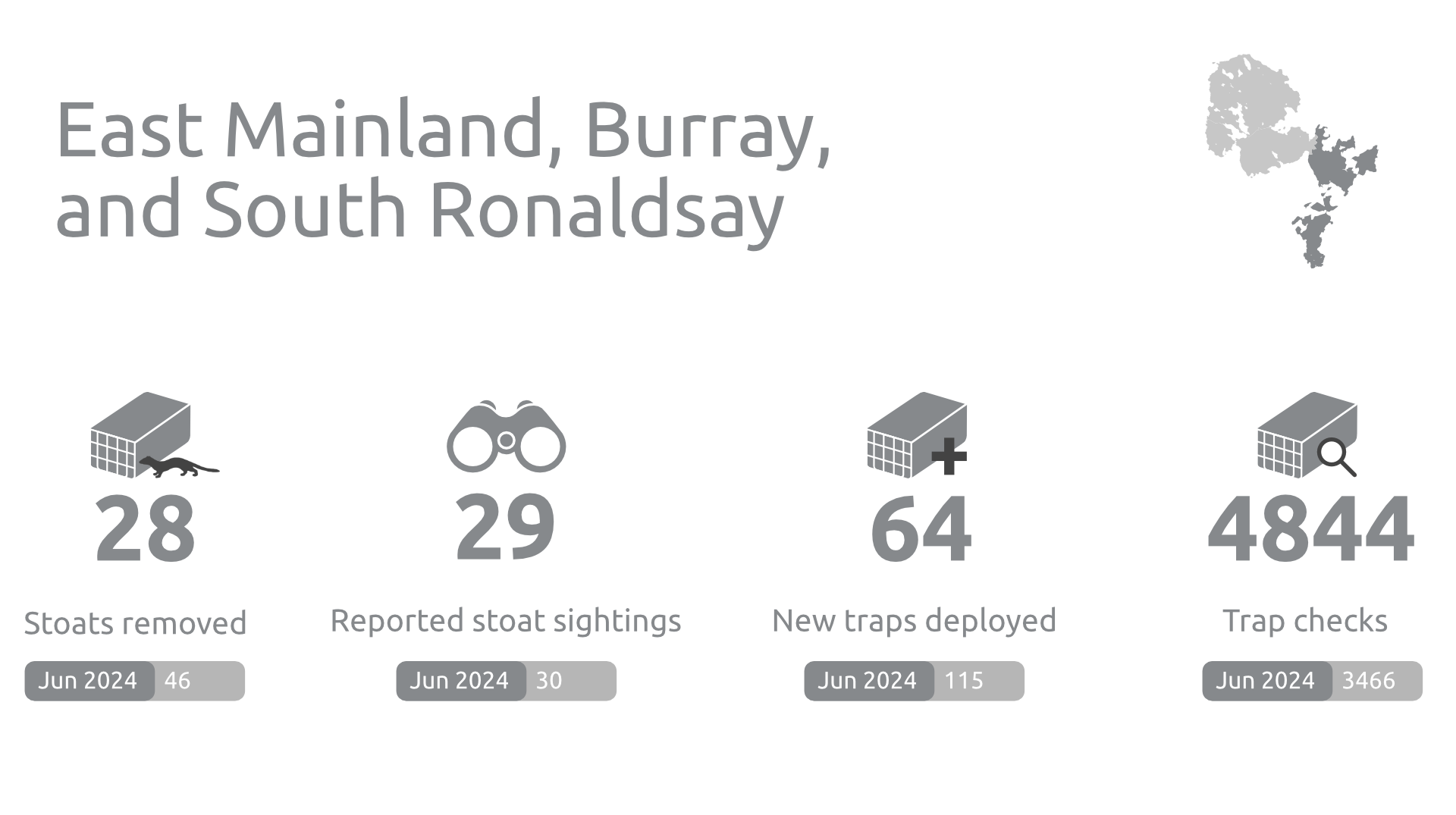
To make sure this is the case, we have become more vigilant and increased the number of our trap checks. In June 2025, we caught 59 stoats, which is an encouraging drop from 74 during the same month last year.
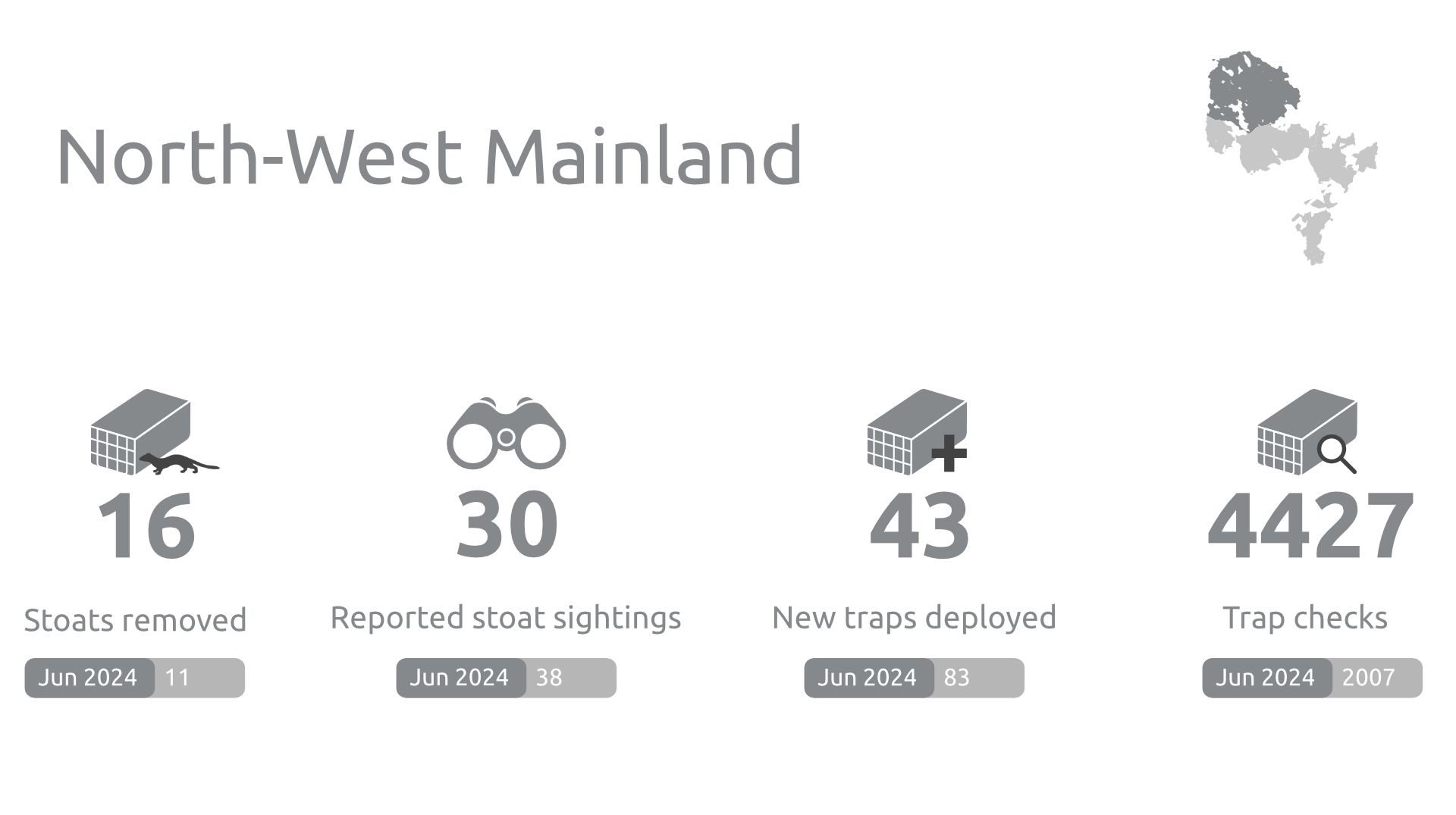
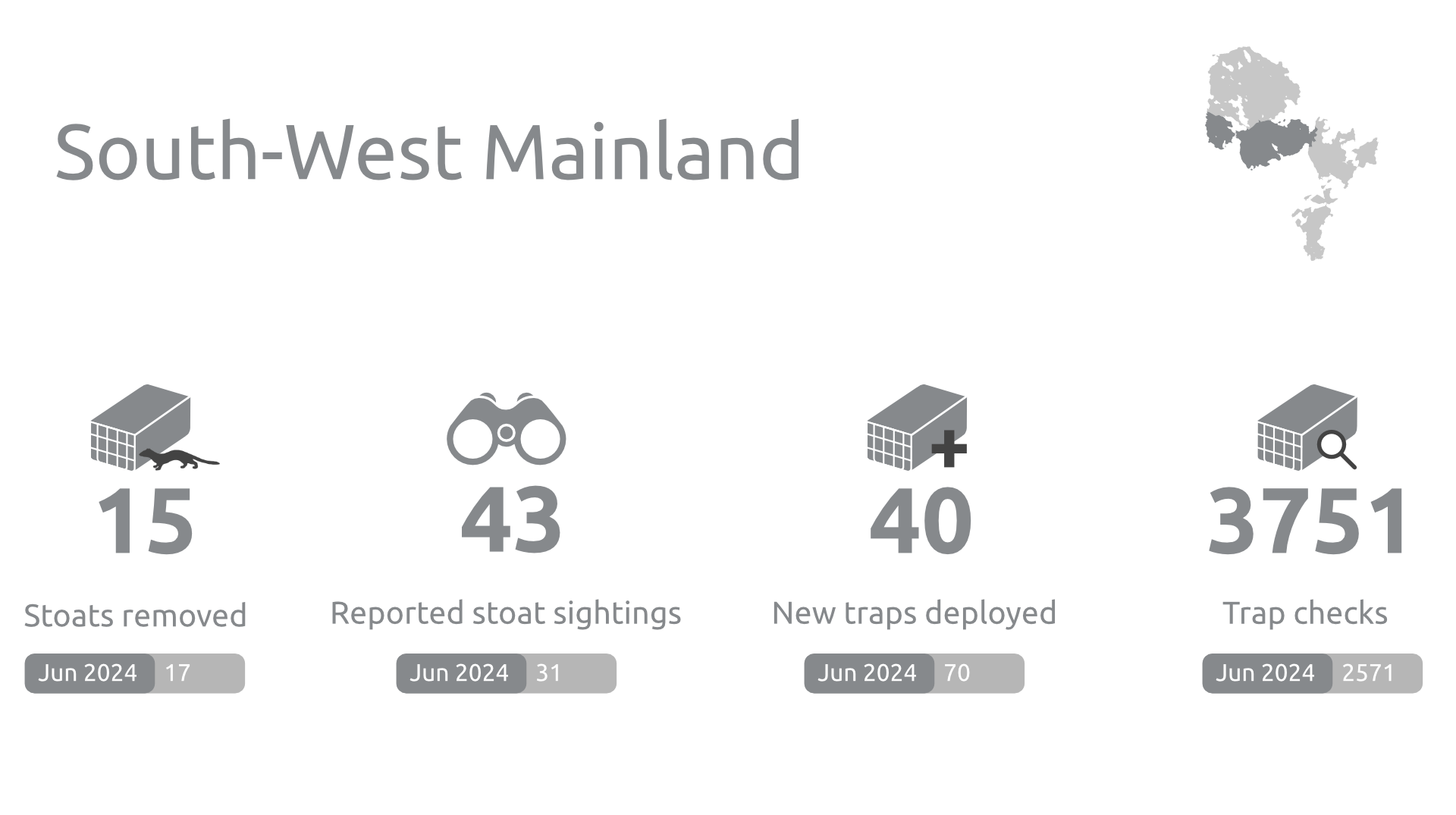
In June 2025, we caught the most stoats in East Mainland and the linked isles - which is also where we are trialling new techniques we may use in the Mop Up phase of the eradication. Folk in South-West Mainland had the sharpest eyes and reported 43 stoat sightings!
We are often asked about how often we catch non-target species. We take all possible measures to ensure as few other animals are caught as possible. Our traps are designed and set to prevent other animals from being caught and we use stoat specific lures. The entrance hole design, trap housing, and trap calibration all contibute to minimising catch of other species. The only non-target species we catch regularly are brown rats. This is because of their similar size and weight to stoats. From December 2023 to May 2025, we have caught 8972 rats, 719 rabbits, 119 starlings, 25 hedgehogs, 27 frogs, 47 voles, 16 unidentifiable rodents, 2 unidentifiable birds, 7 mice, 4 water rails, 2 goslings, 1 wren, and 1 shrew. While we regret any kind of bycatch, an adult stoat must eat the equivalent of one Orkney vole every day just to maintain its body weight. As such, a small amount of bycatch unfortunately must be tolerated if we are to protect the populations as a whole.
We would like to thank our community for their incredible effort and support, our volunteers, and the project team.