They say that summer in Orkney can end as soon as the first week of August – but rain or shine makes no difference to our trappers' hard work.
Last month saw the rise in both stoat sightings and the number of stoats trapped that we anticipated. Stoats can be much more visible at this time of year, because of younger stoats moving across the Mainland and Linked Isles away from the territory of their birth. Many reports from passers-by on Facebook and our reporting page have described this sort of behaviour, with stoats seen running across roads or along roadsides. We are incredibly thankful to everybody who's sent in a report - they really help us to track stoats' numbers and movements throughout the eradication area.
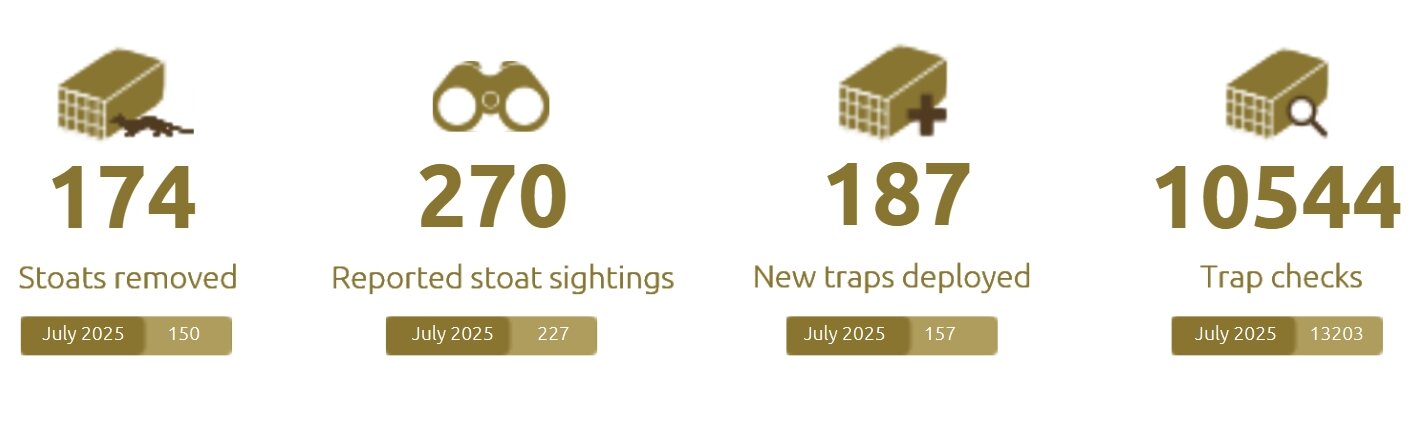
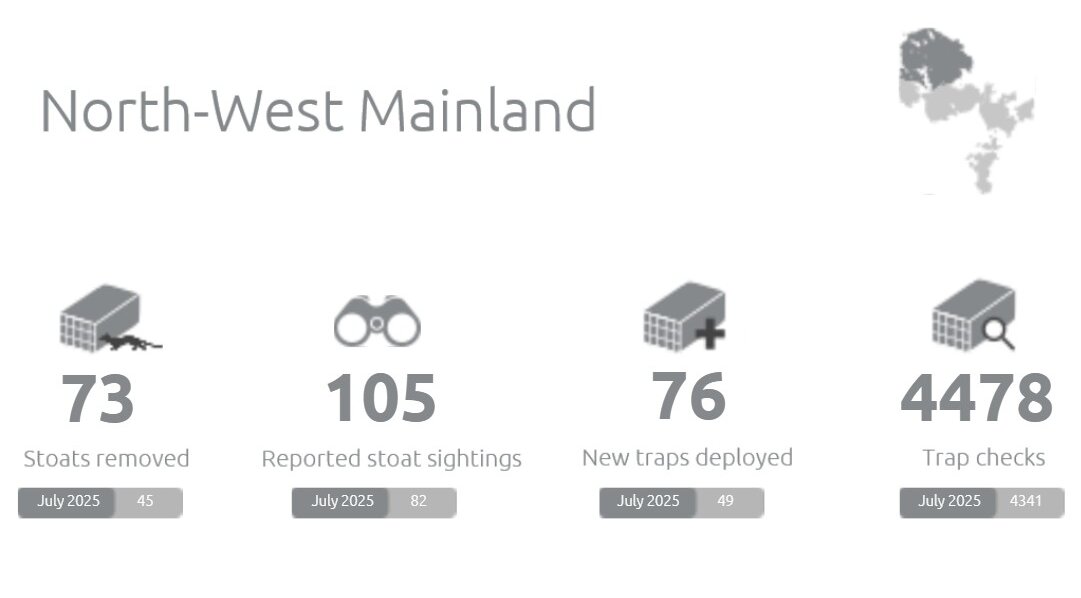
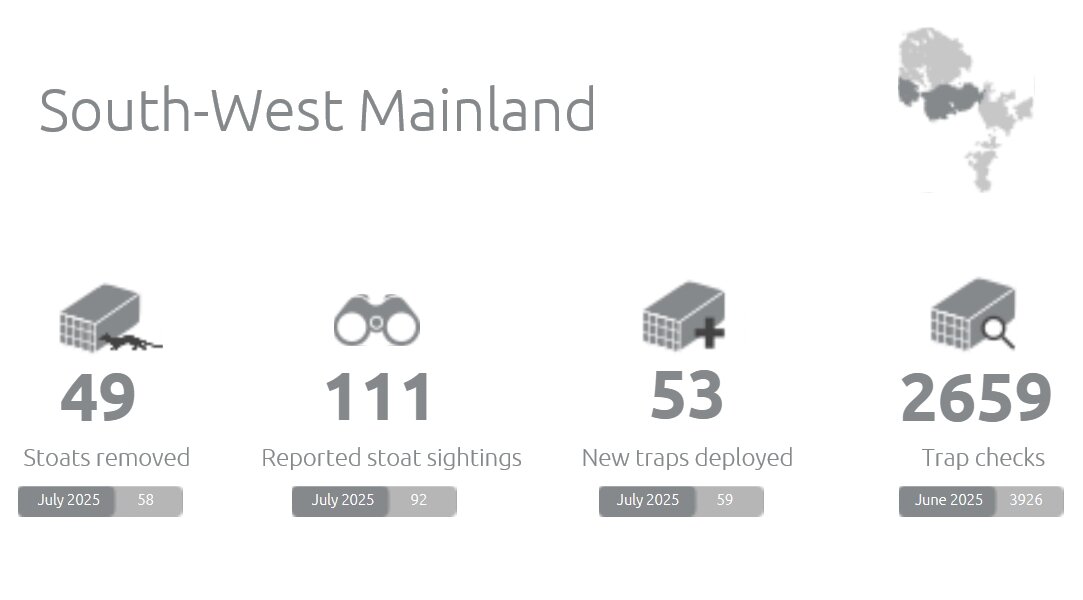
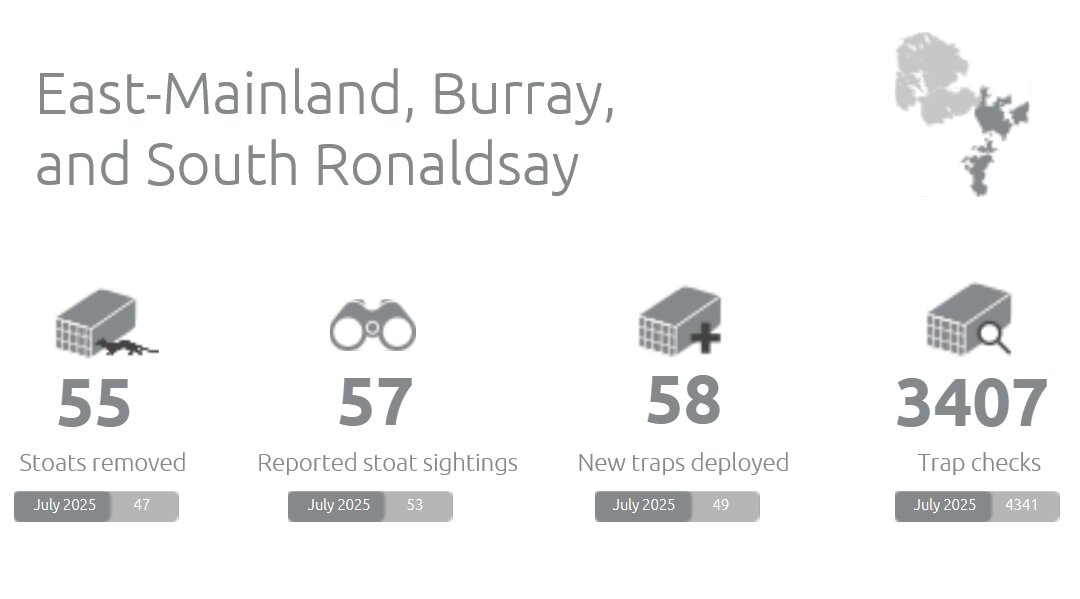
Altogether, the project removed 174 stoats from Orkney, set 187 traps, and carried out 10,544 trap checks. In South-West Mainland, the number of stoats trapped was lower than in July 2025 (at 49, compared to 58 the previous year); the catch number was higher in North-West Mainland, and in East Mainland and the Linked Isles.
Some promising news
We have a positive update from Rousay!
The project sent fresh scat samples collected from the island away to see if it would be possible to get enough DNA from them for testing. And it was! Researchers from the Cardiff University School of Biosciences were able to confirm that the scat tested came from a male stoat.
This is a good sign – it means that there is no evidence of any kind of a female stoat on the island, or that stoats have been breeding in Rousay. As time goes on and we continue to see no kits, we can be cautiously optimistic that this incursion is of a single male, and that therefore the damage it can do to native wildlife is limited.
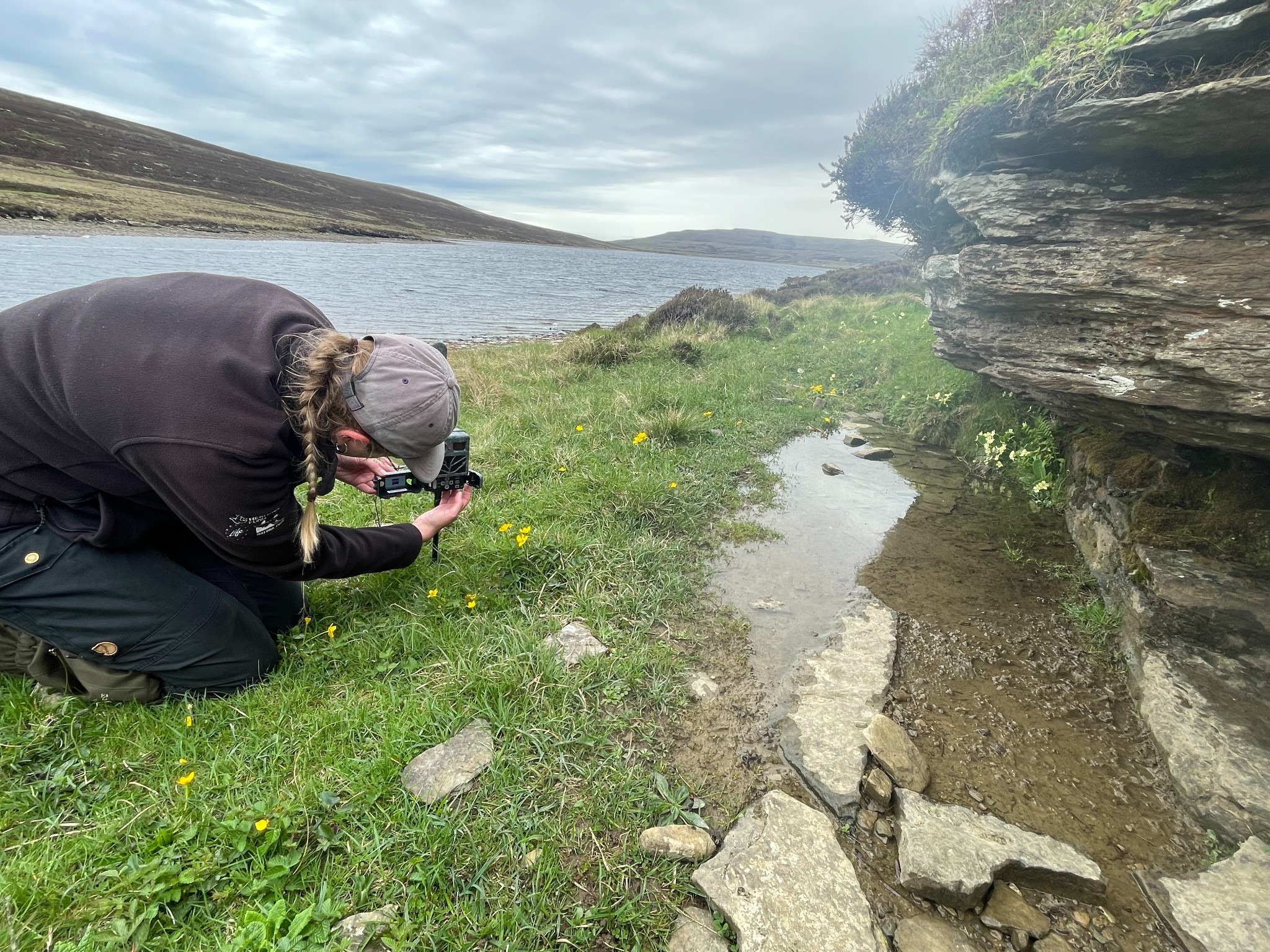
Despite this good news, we need to be absolutely certain that there is not more than one stoat present on Rousay. To do this, we need more monitoring over a wider area of the island, and project staff are continuing to set up cameras and carry out dog searches, with support from local volunteers. The more of the island we have under close observation, the sooner we’ll be sure there is only one stoat - and the sooner we’ll be able to catch and remove it.
We’d like to warmly thank the team at Cardiff, and everybody who’s helped support our response - from the community volunteers in Rousay, to all the landowners on the island, and to everyone who has reported a potential sighting. We couldn’t do it without you all!
It’s showtime!
Last week was Show Week, and we were delighted to take part in the shows up and down Mainland Orkney and the Linked Isles.
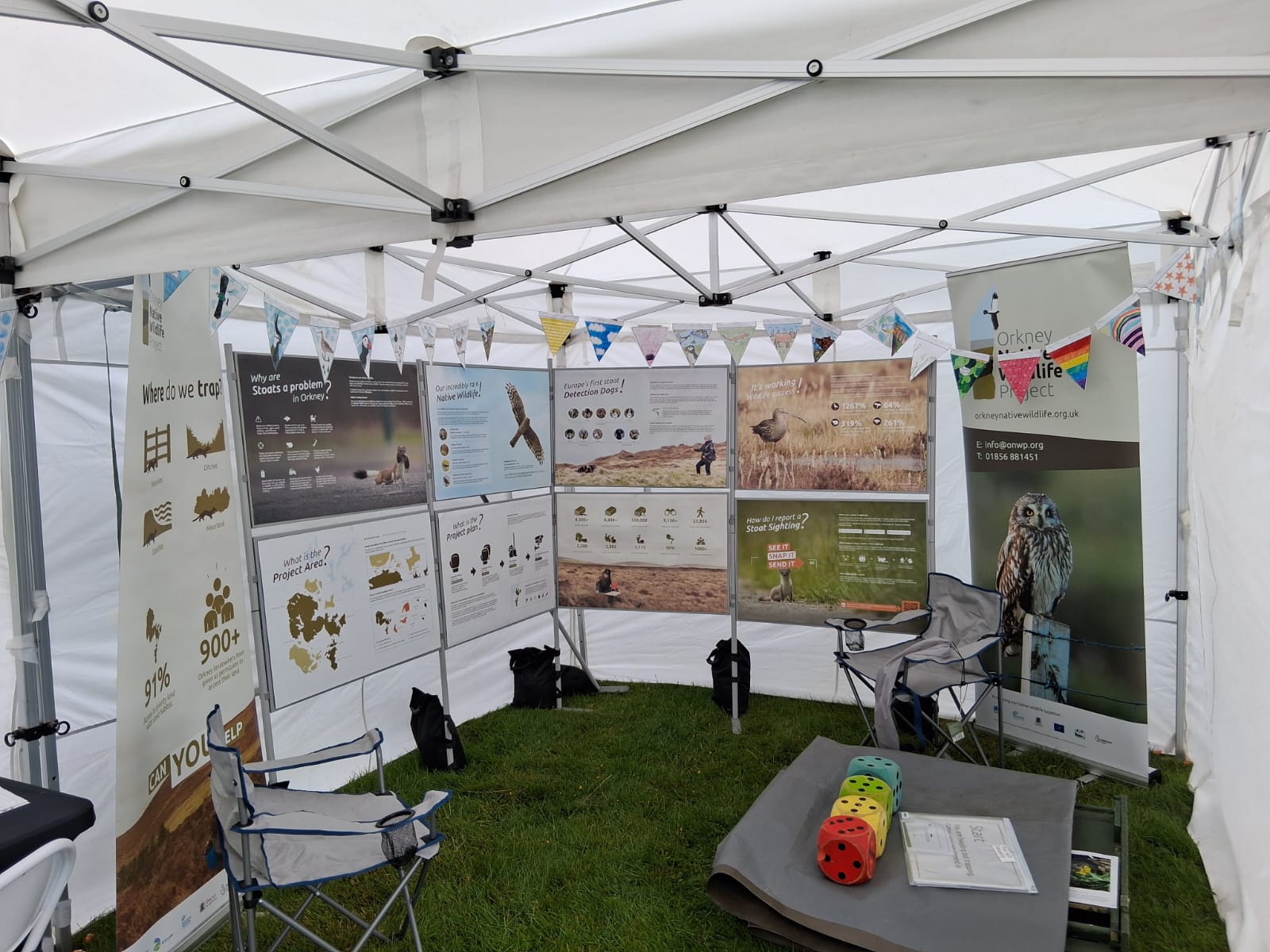
Since last Saturday, ONWP team members held stalls at East Mainland, The Hope, Dounby, and finally the County Show itself. We brought with us games, good cheer, and our detection dog and ‘brand ambassador’ Skye, along with plenty of project tech, for those curious about the inner workings of our conservation effort.
Turnout was excellent, too – across four show days, we had over 800 visitors to our stall. Not bad, considering the weather on some of those days!
This was a brilliant opportunity to speak face-to-face with everyone about our work, and we had some great conversations with people, both Orkney locals and visitors alike. There’s a real enthusiasm for learning more about our native wildlife, and the ins and outs of how the ONWP works in the field.
We were also really heartened by the support shown for the project, and by the number of people who’ve been reporting stoat sightings to us – either in person at the shows, or online to our Facebook page or website. Thank you all!