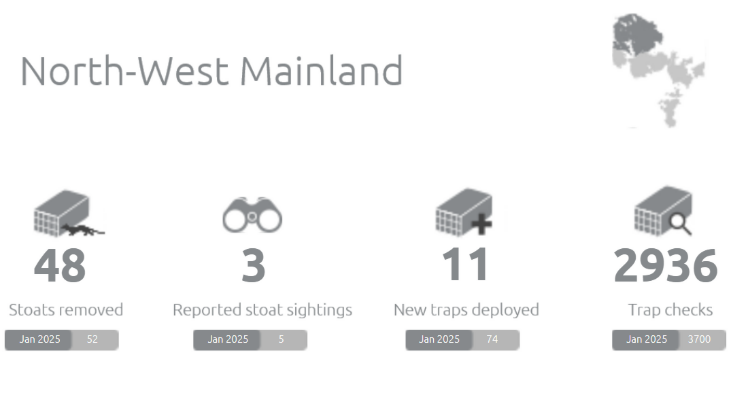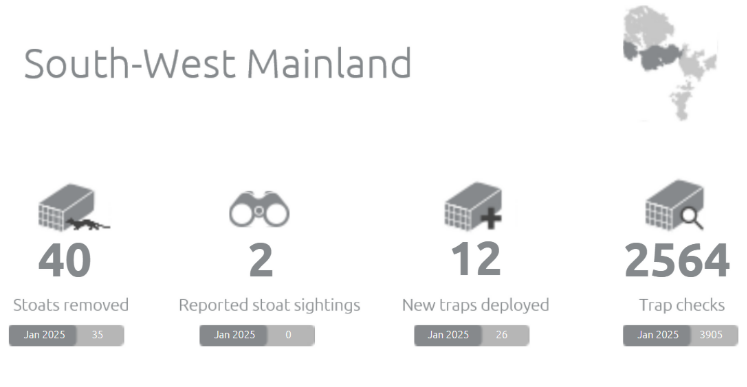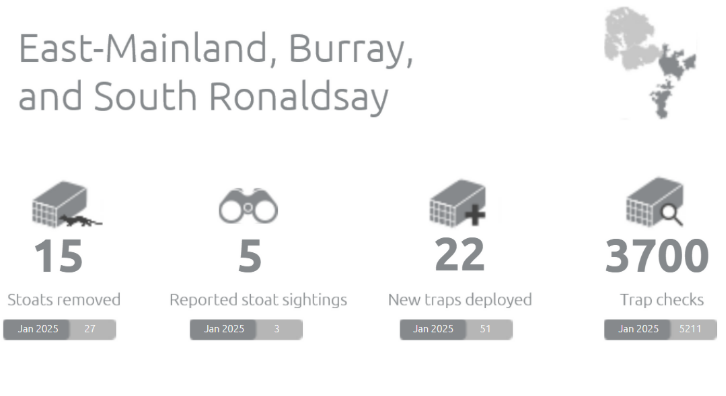
Despite the heavy snow early this year, January was a productive month for our trappers. In general, our activity was lower than last January, which is to be expected – we have already removed thousands of stoats from Orkney, and heavily trapped many of the most significant stoat areas.
Stoat removals were markedly lower in East Mainland, Burray and South Ronaldsay, which is further evidence of the significant reduction in the stoat population in those areas. However, we caught more in South-West Mainland, removing a total of 40 stoats there.
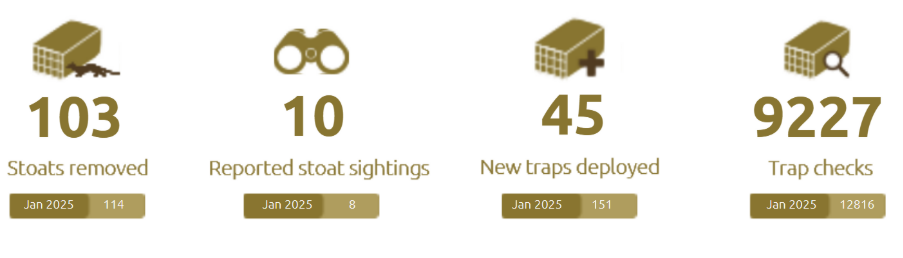
All told, our team removed 103 stoats from Orkney in January, through 9227 trap checks.
Harsh weather left some routes inaccessible for substantial portions of the month and led to a slight reduction in the number of trap checks, but our trapping team took the opportunity to catch up on other work – including fine-tuning our GIS mapping, building several new styles of trap housing and preparing a bulk supply of bait for the coming months.
Despite the significant reduction in the invasive stoat population so far, it is heartening to see an increase in stoat sightings from the public compared to last January. Reported sightings are vital to helping us find and track the movement of stoats in Orkney. Now, more than ever, as we prepare to remove the last remaining holdouts in key areas of the Mainland and Linked Isles, any increase in reports – no matter how small – is incredibly helpful.
As always, thank you all for your support. Each sighting submitted, acre of access given or volunteer hour completed makes a huge difference to our native wildlife.