Latest update - 9 October 2026
We have some excellent news to share. The stoat in Rousay has been caught!
It was seen on camera over the weekend and again last night. Then this afternoon the team found the stoat in a trap near the Loch of Loomachun.
It was a male stoat which is what we've been expecting based on behaviour and the DNA that was retrieved from stoat scat (poo) a while ago.
It's lovely to see everyone's hard work and determination pay off as it has been a big task to find and capture this stealthy, fast-moving animal that has been ranging so widely across the 4500 ha island.
Removing this stoat would have been so much harder without the support of the Rousay community - the fantastic volunteers who have supported the incursion so much since we confirmed there was a stoat, the landowners who have given us access to land to search and for trapping and everyone (residents and visitors) who have reported potential stoat sightings and signs. We are so incredibly grateful.
There is still more work to do though and we cannot get complacent. Over the coming weeks and months, we will need to keep up intensive monitoring efforts to be absolutely certain that this stoat was the only one. And if we see no further signs, in line with international best practice, we will need to keep monitoring the island for two years from today before we can declare Rousay is stoat free.
This incursion shows us just how much we can achieve when we all work together! But it's also reinforced that, despite the great progress we are making in removing stoats from the Mainland and Linked Isles and the wildlife recovery we've seen in response, we need to work faster to remove every last stoat. This is the only way to keep other islands safe and protect Orkney's globally important native wildlife and all it provides us through enjoyment, wellbeing, inspiration and the millions of pounds it brings to our economy each year through tourism.
Unless something unexpected happens, it is unlikely we will update this blog again for a good while. So, we just want to say thank you again to everyone who has supported the reponse to the arrival of the stoat in Rousay and the eradication efforts more widely. Day by day the threat to native wildlife is reducing and that is thanks to you.
Update - 22 September
Since our most recent update, the Rousay stoat was seen and reported by a member of the public once more, on the road near Blackhammer Chambered Cairn.
We also had one additional sighting on camera, on 16 September.
Our staff have also continued to deploy more Zeiss trail cameras. In total, we currently have 174 additional traps and 61 cameras deployed, including 25 AI-assisted cameras.
Update - 7 September
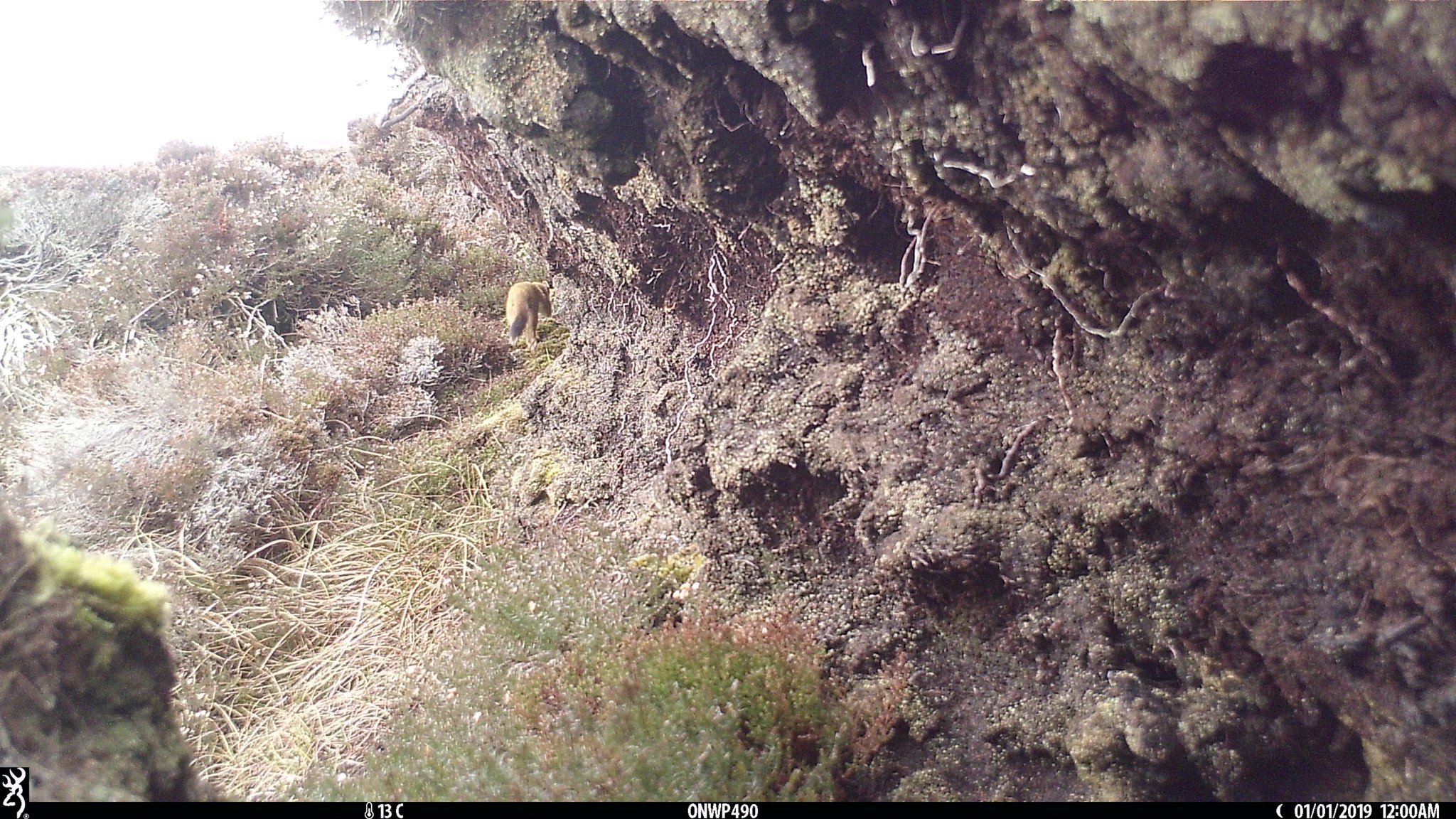
As of today, we have picked up one extra sighting of the stoat on a trail camera. On 6 September, the photos below were taken, by a camera on the north shore of Muckle Water. This confirms the stoat is still active in that area, and we will continue to closely monitor animal routes and regularly check our response traps there.
We are continuing to train local community volunteers in Rousay and are very grateful for their support. By regularly checking camera feeds and trap routes, they are supporting our project staff in their work to protect native wildlife on the island.
In total, we currently have 162 additional traps deployed, 41 cameras, and 5 AI thermal cameras.
Update – 24 August
The past month has continued to be relatively quiet, with few stoat sightings by passers-by, or stoat images recorded on our trail cameras. Most recently, on 21 August, the stoat was again picked up on camera close to the shores of Muckle Water.
The most recent report came in last week, from the northwest of the island; rather than seeing a stoat, a walker spotted a ‘cache’ of dead rabbits, stored in a hollow. This was likely created by the stoat storing its prey to be eaten later, meaning it's probable that it was hunting in the area. At the moment, all evidence - including the behaviour we've observed, the complete lack of family group sightings in late summer, and tests carried out on DNA traces - supports the idea that this stoat is a single male.
Our staff have laid a response trap network in the habitat where the ‘cache’ was found. We are also continuing to place additional traps and trail cameras on the routes across Rousay’s central moors. In total, we currently have 162 additional traps deployed, 41 cameras, and 5 AI thermal cameras. This widens the net as we move towards monitoring as much of the island as possible - so that if any stoat family groups should emerge, we will learn about them quickly.
To achieve this, our trail cameras will need to be in place for some time, so we can be completely sure that stoats are not breeding there, and surveillance will need to continue even after the stoat is caught. In addition, the international best practice for invasive species eradications is to continue monitoring for two years after the last animal has been removed. The ONWP will be sure to follow these standards in our response on Rousay.
We’d like to give our warmest thanks to the person who reported the cache, and to all folk who have sent in their stoat sightings.
Update – 15 July
Things had been a little quieter in the last week for stoat sightings until yesterday (14 July) when we had two new ones. The first came from one of the Zeiss AI cameras, which notified us of a stoat at 7.37 am near the Loch of Loomachun. Later, someone reported a potential stoat sighting from mid-afternoon to the east of the island, near the Burn of Cruar – a different location to previous sightings.
With the distance and time between these sightings, it is still entirely possible that we have one roaming male stoat. As time goes on, and we continue to have no sightings of any kits or a family group, we can start to hope that this is the case. However, these sightings show how important it is to increase camera surveillance to cover more of the island so that we can be sure what we are dealing with.
We are incredibly grateful to the person who reported the latest sighting and everyone else who has reported potential sightings. They are so important in helping gather information as to how the stoat is using the landscape and where it is moving. We also want to thank Rousay’s landowners for supporting access for traps; having access permissions for nearly the whole island already is allowing us to respond to new information quickly. And, last but certainly not least, a huge thanks to all the volunteers who are helping check traps and thousands of camera images.
The team have deployed additional traps in the vicinity of both these new sightings.
In total, we currently have 132 additional traps deployed, 41 cameras, and 5 AI thermal cameras.
Update – 8 July
Since the previous update, we’ve had no new images captured by the cameras and not caught the stoat in any of the traps.
We have had another stoat sighting reported, on 2 July, near to the previous sighting at Langskaill. We’ve put extra traps out in this location as well as to the north of Muckle Water near the Loch of Loomachun.
We have also made some good progress towards filling in final land access permissions as we prepare to move to a much wider surveillance operation across the island. We’d like to thank the landowners, as well as our wonderful local volunteers, for working with us to remove this stoat from Rousay.
In total, we currently have 103 additional traps deployed, 35 cameras and 5 AI thermal cameras. But more are being deployed today around the latest sighting.
23 June
On Saturday 13 June, a stoat was seen crossing the road from the Loch of Wasbister. The team deployed nine traps in the area of the sighting and on Friday we did a dog search too.
The dog search focussed on the area of the latest sighting, but also along an area of priority habitat (an area a stoat would favour) along the back of Muckle Water. The dog found some old and very old scat on the second part of the search but nothing of note on the small search near the sighting.
Then last Sunday (21 June), we received another sighting from south of Muckle Water heading down the hill. The team are back out today placing cameras and traps in this location.
It is entirely possible that these sightings could be of one individual stoat moving around the island. But we need further information to work this out; this will include putting out additional cameras over a much wider area. It could also include a dog search to determine if a stoat is moving between Muckle Water and the north of the island/Loch of Wasbister) which could help us understand if this is one stoat moving around frequently or if we might have more than one individual. A single search will never be sufficient to tell us for certain, but all information is helpful not just for catching the animal, but for working out the scale of the issue. A single stoat moving this far across the landscape would almost certainly suggest a male, which would be the best outcome we could hope for.
Our land access officer also spent some time on Rousay last week trying to gain access to land where we hadn’t yet determined who owned it. These are mostly small areas but are all incredibly important as we look to move to more of an island-wide approach to our response.
In summary, we have now had five potential sightings of a stoat – Muckle Water, Westness, at the north side from the road, near Loch of Wasbister and now south of Muckle Water. We currently have traps and cameras to the east, north and south of Muckle Water where we had the original sighting, the first camera sighting, and found recent scat respectively. We also have cameras and traps on the north side of the island at the locations of the sightings there.
In total, we currently have 63 additional traps deployed, 22 cameras and 5 AI thermal cameras. But more are being deployed today around the latest sighting.
12 June
Since the last update staff and volunteers have been continuing to monitor the traps and cameras. No stoat has been caught and we've not seen any further images. We also want to say a huge thanks and warm welcome to new volunteers that have joined the efforts. We held a morning of training with them and the existing volunteers so they are now assisting with trap checks as well as the mammoth task of collecting and checking images from the trail cameras.
We currently have 53 additional traps deploed, 22 trail cameras and 5 AI thermal cameras.
We are in the process of getting more cameras into the field, but also looking at how we can monitor more of them remotely to be more efficient. Signal conditions have been challenging, but we think we are close to finding a solution. We are also keen to find a way to do an automated initial filter of images from the standard trail cameras as each one produces an average of 1000 images a week to be checked.
4 June
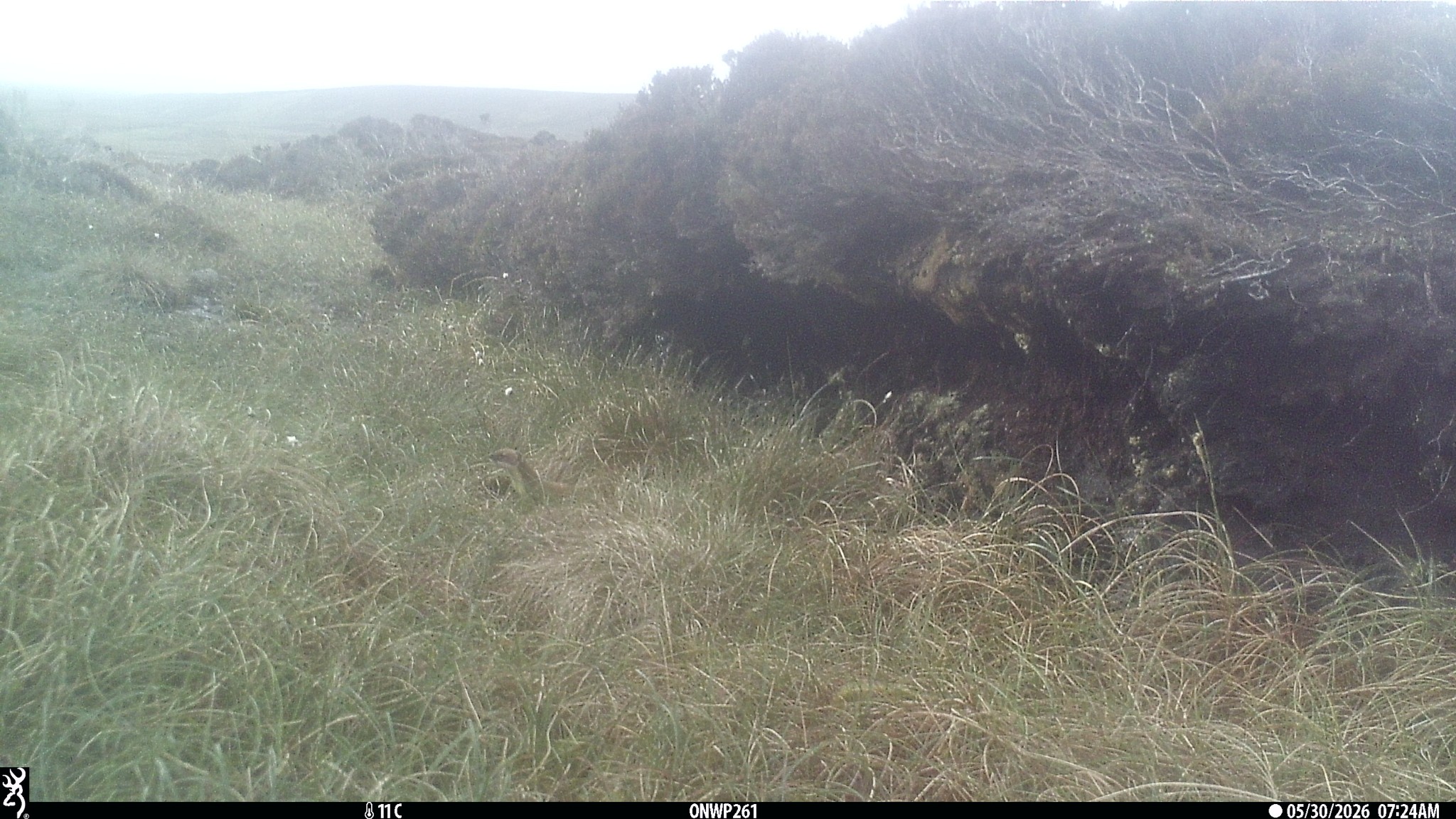
Since our last update the team have been continuing to work with local volunteers to monitor the camera and trap network as well as begin to expand the response based on evidence found in the field. Although we have not had any more public sightings since the start of April, two dog searches at the start of this week did discover fresh scat (poo) in a location approximately 2km from the original sighting at the western end of Muckle Water. Alongside this, one of our cameras detected a stoat near the original public sighting location over the last weekend (30th-31st May). We also had an image of a stoat from one of our cameras on the north side of the island a few days before this.
A new network of cameras and traps was established, by the team of local volunteers, the day after the fresh scat was discovered at the western end of Muckle Water. The discovery of the fresh scat is very useful as this allows us to continue to build a picture of the extent of the problem, although more evidence is needed before we can draw any solid conclusions.
We currently have 53 additional traps and 23 cameras (including 5 AI cameras) on Rousay as part of the response.
28 May
Since the last update, a dog search found scat in a slightly different location to the south of Muckle Water and the team has set up additional traps and cameras in that area. The traps have been checked, with no stoat caught, and are being checked again today. No further sightings have been reported.
We currently have 35 additional traps and 20 cameras (including 5 AI cameras) on Rousay as part of the response.
Want to know more? We will be at The Pier Cabin from midday until 6 pm on Monday (1 June) and folk can drop by at anytime for a chat, to ask questions or to find out how they can get involved. We are then meeting with the Rousay, Egilsay and Wyre Development Trust to provide them an update.
Update – 21 May
With the support from the community volunteers, on Monday (18 May) the team checked the traps and cameras in both response areas. No stoat had been caught in the traps and no new stoat images were seen on the cameras either. The next check is today (Thurs 21 May). With support from NatureScot, we are also sourcing more cameras that can send alerts and images via SMS. These should help by allowing us to monitor what’s happening without having to return to the cameras unless batteries need replacing - providing they can overcome the signal challenges currently affecting some of our other kit.
Intensified response
The following day, 8 May, the team return to place additional traps and cameras and conduct further dog searches. The dogs find some old stoat scat. The team return three days later (11 May) to meet up with trained incursion response volunteers from the community and conduct another dog search around the edge of Muckle Water. They find some more old scat.
Stoat presence confirmed
On 7 May, during a check of the images captured by the trail cameras deployed on Rousay, two images of a stoat are found. They are from the same camera near the north-east side of Muckle Water.
Initial response
Following each sighting, members of our trapping team head to Rousay on 9 and 14 April to deploy extra traps – in addition to those already on the island as part of preventative biosecurity measures – along with cameras, including AI cameras, and detection dogs, searching for signs of stoats. They don’t find any signs of stoat presence during these searches.
Initial sightings
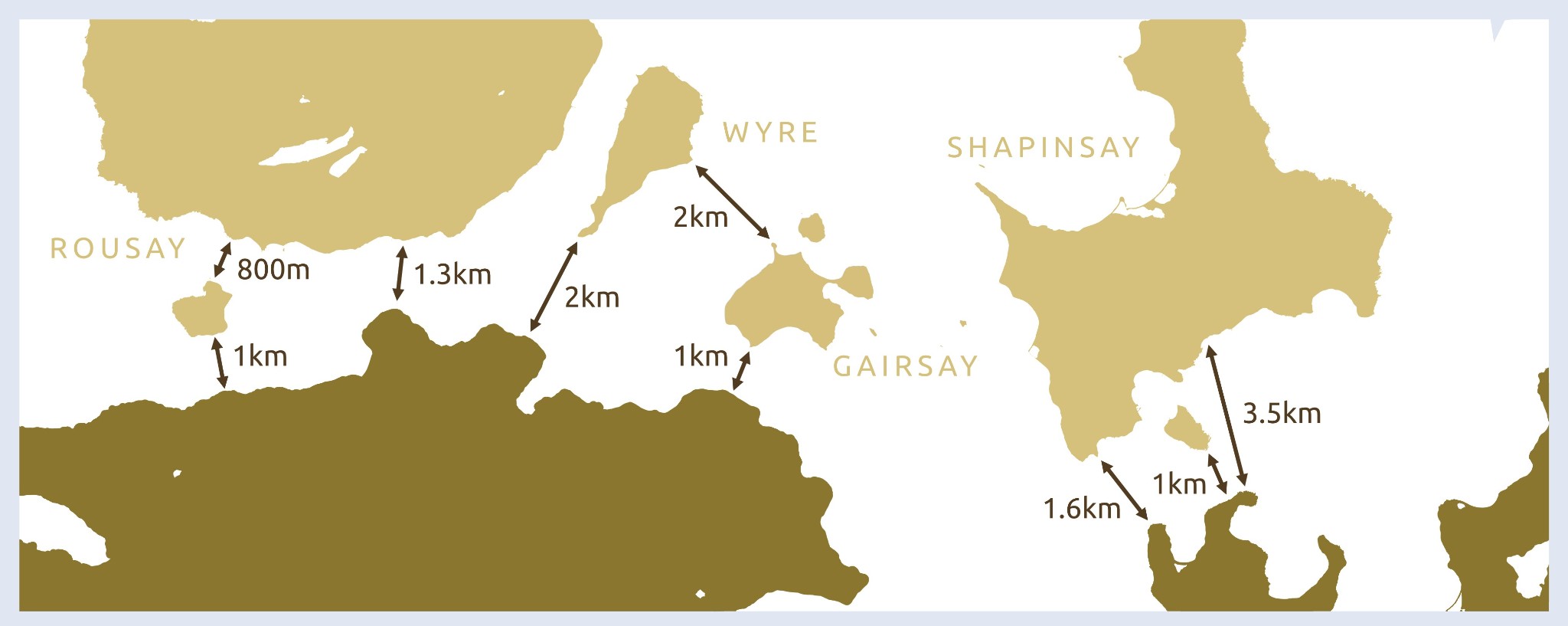
On 8 April, after seeing one of the project’s posters, a tourist reported they may have seen a stoat near Muckle Water on 6 April. Two days later, on the Friday evening, another visitor to Rousay reports a second potential stoat sighting via the project website. It was from near Westness from 8 April.