What’s inside the trap boxes?
Most of our trap boxes contain two DOC200 or DOC150 lethal humane traps. They work similarly as a common mouse spring trap would, except these are bigger and dialed up to 11. They’re legal for use in Scotland and reach welfare standards defined by the Agreement on International Humane Trapping Standards.
You’ll also find something to lure stoats inside the boxes. The lure itself varies depending on the season. Typically in the winter we’ll use fresh rabbit and fish, and in the summer dried rabbit and egg. We also use several other scent-based enticements including an anal gland lure developed from the female stoats we’ve caught and dissected.
How do you prevent other animals entering the traps?
We’ve taken every measure we can to stop other animals getting caught. As well as using stoat specific lures, we have sized the entrance hole and calibrated the weight of our traps to match a stoat.
For animals to enter the traps, they must squeeze through a 40mm hole. This is near impossible or too much effort for most animals, but for a sneaky stoat, it’s just wide enough to slip through. The distance between the trap box entrance and the trap mechanisms as well as the offset inner baffles should also prevent animals from reaching the trap mechanism from outside the trap box.
The traps are also set to spring with a weight of 90-110g, meaning lighting animals such as mice, voles and shrews should not spring the trap on their own. The only non-target wildlife we catch regularly are rats – which is because of their similar size and weight to stoats.
Where do you place traps and why?
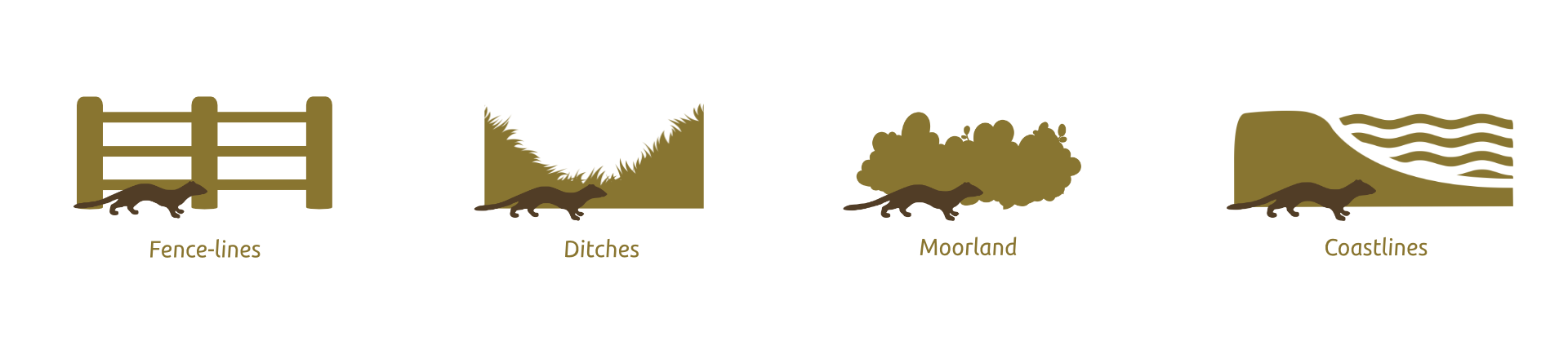
We target priority stoat habitat. Moorland, gardens and ditches are playgrounds for the invasive species. It’s where they den and store food. The abundance of vole life in the same area means an easy meal is never too far away! We also target paths stoats take when they’re on the move. They tend to use linear features such as ditches, hedgerows, and drystone walls to move around their territory.
You won’t find trap boxes in the middle of open fields, surrounded by farming cattle, or in urban areas. Although there’s always a possibility a stoat may run through these patches, our chances of catching them are better placed in their preferred sheltered territory.
If you've seen a stoat, report it to orkenynativewildlife.org.uk/report.