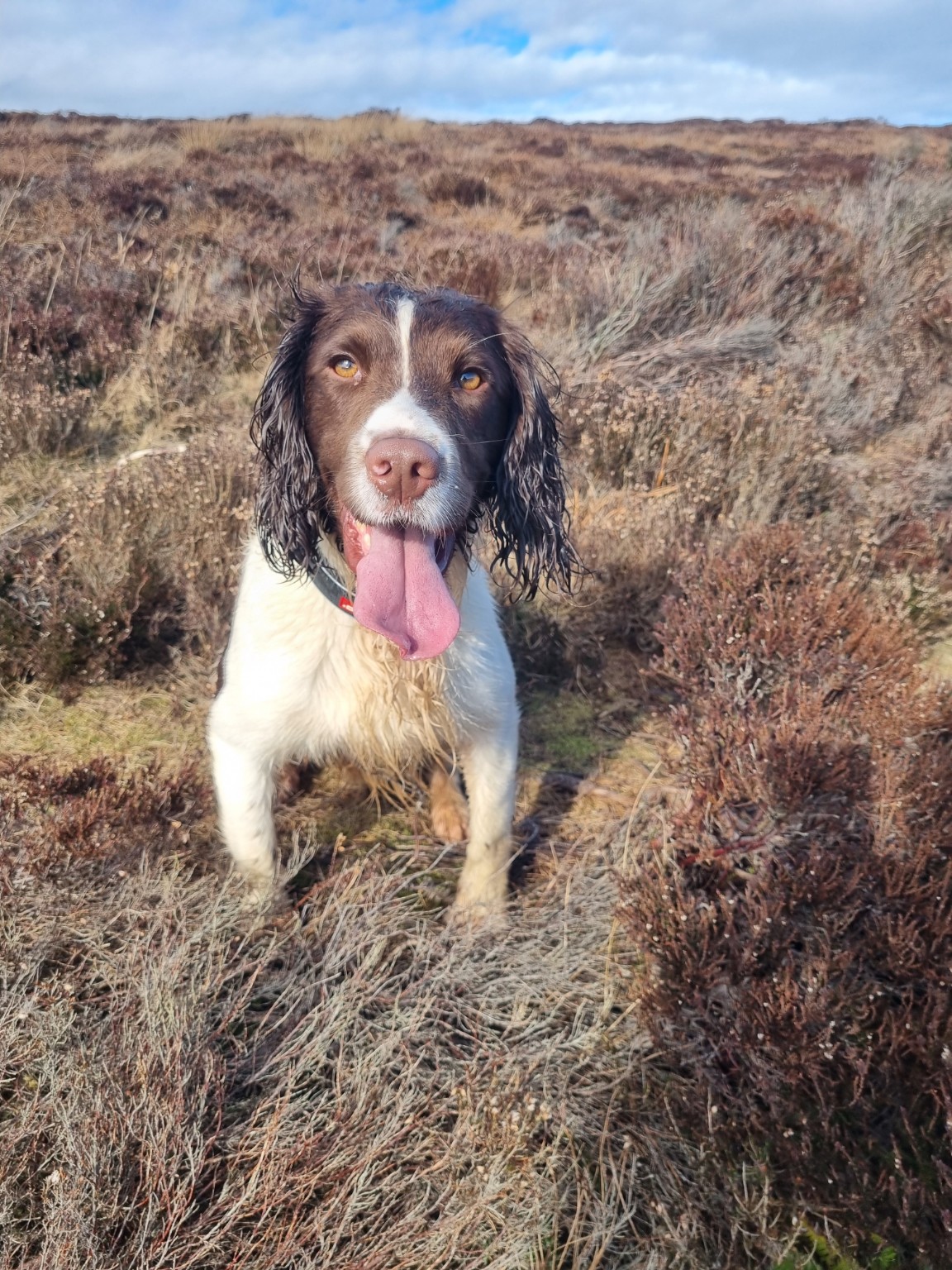
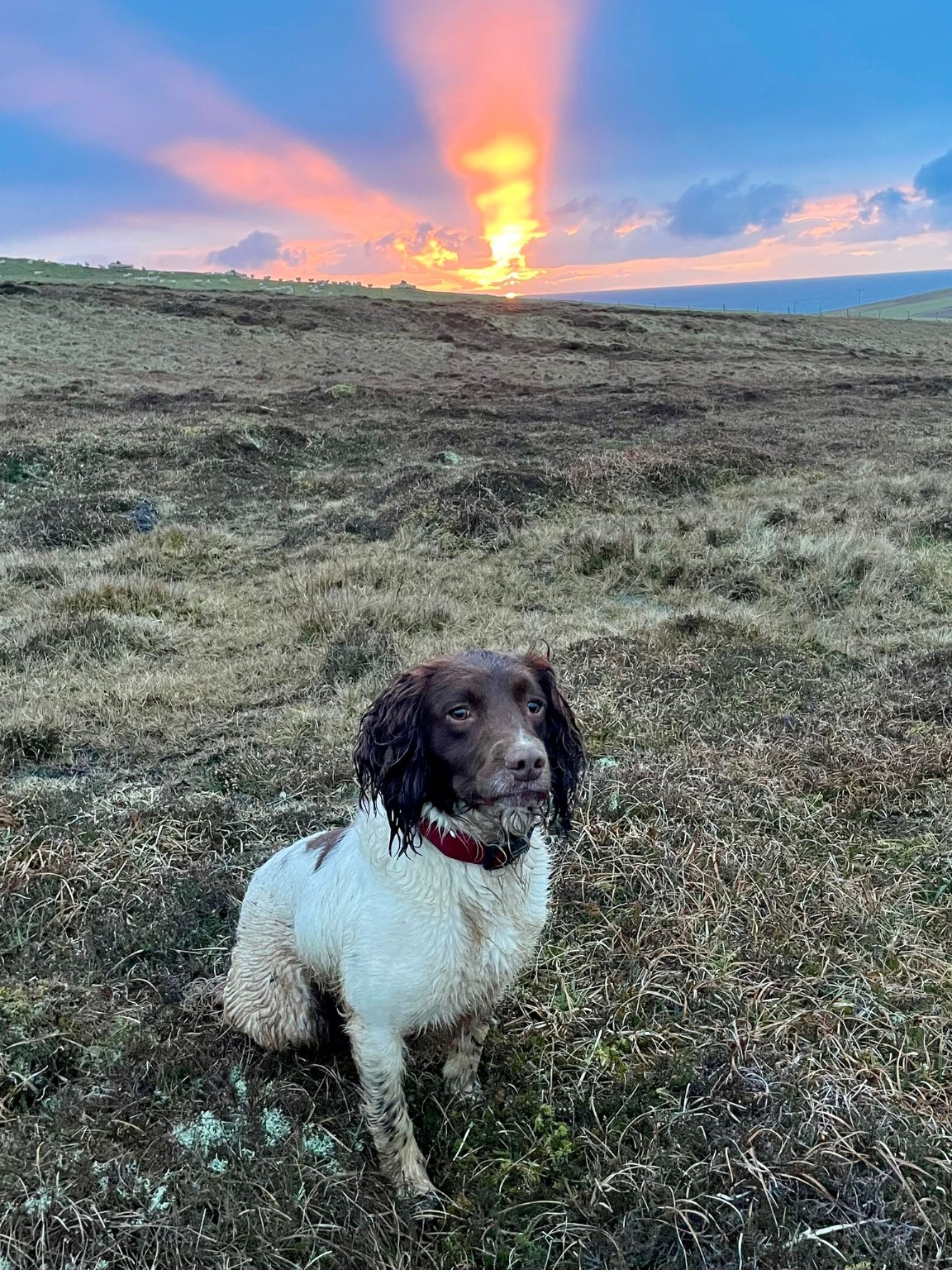
For the first time since our project began, the team’s detection dogs are being fully trained in Orkney, with the first of three new dogs already working hard to find the locations of remaining stoats.
The new dogs have been trained by Alan Clouston from K9 Detection Scotland. Alan, whose business is based in Stenness, has been training dogs for 15 years, but in 2024 diversified from gundogs to also train conservation detection dogs - beginning this journey with stoat detection dogs.
Having been successful during a competitive tender process, Alan began helping us by training new dogs in 2024. The first, Mambo, joined the team earlier this year and is now fully operational. Working closely with dog handler Roddy, he was searching for stoat scat (poo) in Burray earlier this week. The next dog, Spud, will be transferred to our team later this month, with a third, called November, following soon after.
Dogs have around 300 million scent receptors in their nose and their ability to pick up scent is 40 times greater than humans. This, along with rigorous training, makes them highly skilled at sniffing out signs of stoats - helping check stoats haven’t spread to other islands and finding the remaining stoat hotspots, particularly in East Mainland and the Linked Isles where numbers are low.
Stoats are notoriously difficult to detect – and this is particularly the case when their population density is low. The detection dogs are a vital part of our team, demonstrating both the presence and the absence of stoats more efficiently and effectively than sightings reports, camera monitoring and human searches alone.
When the first project dogs arrived in 2021, the trio were the first stoat detection dogs in Europe. Two of those dogs are still searching out stoat scat – although a well-earned retirement may beckon – and they have gained several new teammates over the last five years.
The detection team now has two stoat tracker dogs, which arrived in 2022, and eight scat (stoat poo) detection dogs including Mambo, the first dog that was trained in Orkney by Alan.
Like all the project’s detection dogs, Mambo and Spud have been rigorously trained to the highest standards similar to those used to train drug dogs. The difference is that they are trained to identify the signs and scent of stoats and to indicate this to their handlers. They are also trained not to attempt to chase or catch any stoats or react to the presence of other species or livestock.
The dogs play two crucial roles in the project. They are vital in checking stoat-free islands to confirm the continued absence of stoats and are increasingly important, as the eradication progresses and stoat numbers are vastly reduced, in helping pinpoint the locations of remaining stoats.
Stoats are native to the UK Mainland but not to Orkney, where they pose a very serious threat to Orkney's globally important native wildlife particularly the Orkney vole, hen harrier, short-eared owl and other ground nesting birds such as red-throated divers, Arctic terns and curlews. Removing stoats from Orkney is essential to safeguard the future of Orkney’s wildlife and the parts of the economy that rely on it - particularly wildlife tourism, which brings thousands of visitors and millions of pounds into the county each year.
The Orkney Native Wildlife Project – a partnership between RSPB Scotland, NatureScot and Orkney Islands Council – is undertaking the largest stoat eradication on an inhabited landscape anywhere in the world. We aim to protect Orkney’s native wildlife by completely removing stoats, an invasive non-native predator that was first confirmed present in Orkney in 2010.
The project is supported by funding from The National Lottery Heritage Fund, EU Life and the Scottish Government’s Nature Restoration Fund, managed by NatureScot, and the generosity of people across Scotland and the UK.
To date, more than 8500 stoats have been removed and the threat from stoats is being reduced day by day thanks to the huge support from landowners, volunteers and people reporting sightings.